Reading water · River trout
How to read a small trout river
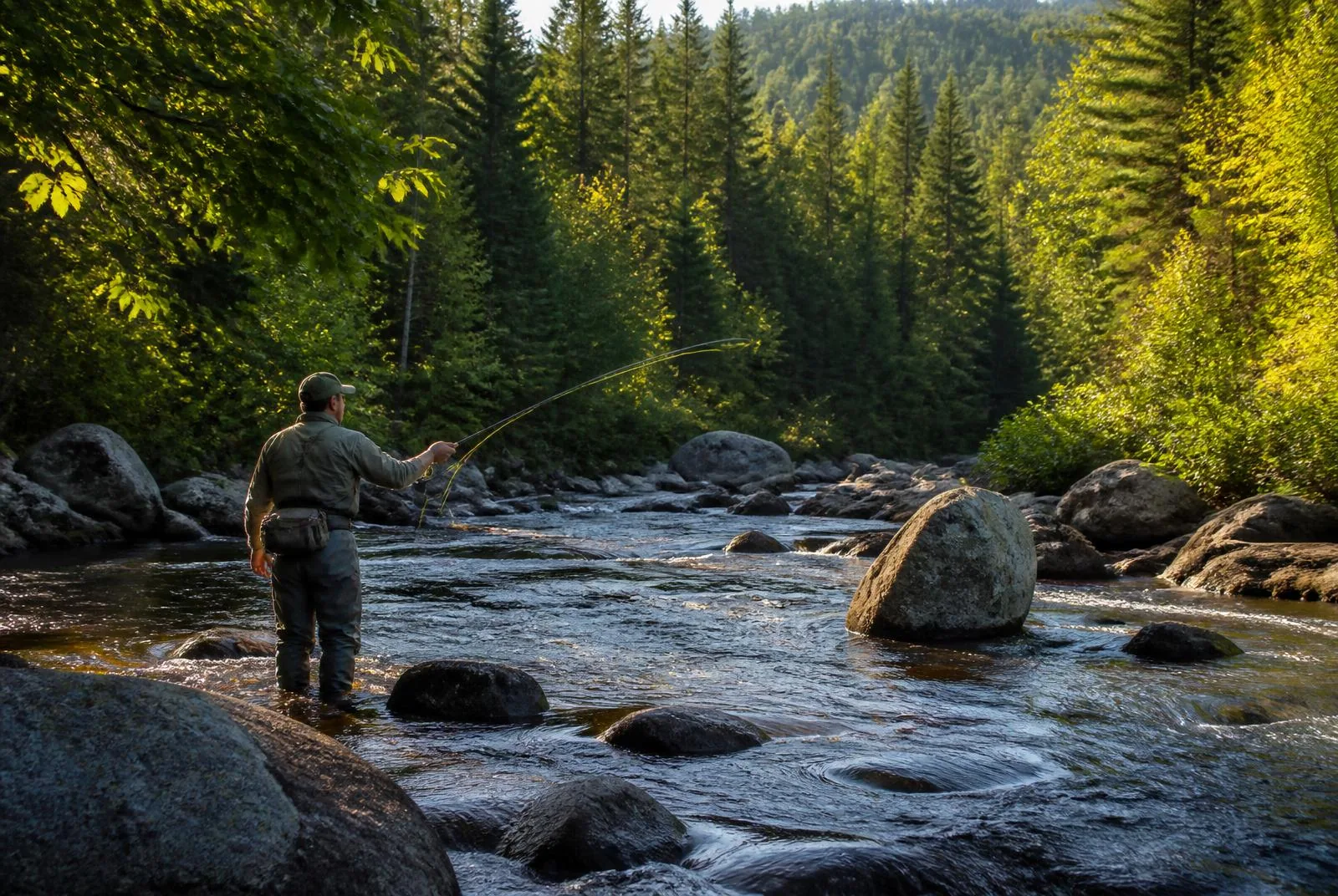
Reading a river means finding places where trout can save energy while food comes to them. Look at pools below riffles, current seams, undercut banks, shade and cover created by rocks or wood.
Check available datesFive places to inspect first
Watch before stepping in. A trout near the bank may leave before your first cast if it sees or feels you.
- The pool immediately below a riffle.
- The soft seam beside faster current.
- A shaded, undercut bank.
- The downstream side of a rock or submerged log.
- The mouth of a colder feeder creek.
Fish close before casting far
Start at your feet and lengthen casts gradually. Move slowly upstream where safe so the water ahead remains undisturbed.
Conditions move the fish
Rain changes flow and opens new holding water. In low, clear water, shade and stealth matter more. Your guide selects water based on recent conditions.
Frequently asked questions
- Do I have to enter the water?
- Not always. Many lies can be fished from shore. When wading, choose safe water and suitable footwear.
- Why work upstream?
- Trout commonly face the current; approaching from below helps you remain less visible.