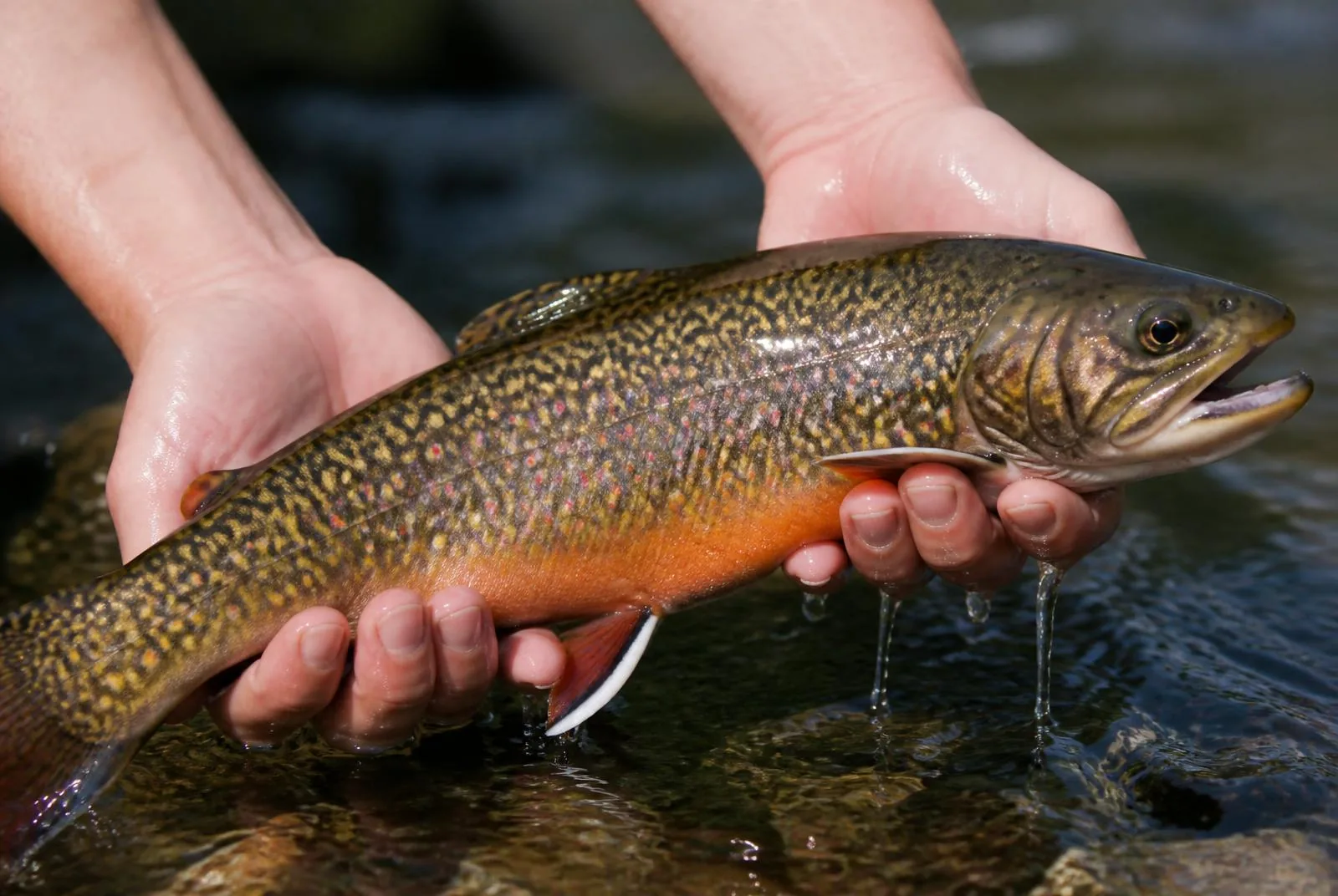
Wild speckled trout
Brook Trout Fishing in the Laurentians: Habitat, Techniques & Tips
River and stream trout trips from $130 CAD / person
Brook trout, also called speckled trout, generally seek cool, clean, well-oxygenated water.
In the Laurentians, some lakes, rivers and small creeks hold natural populations of this species.
To improve your chances, it's important to understand where fish hold, how currents carry their food and how their behaviour changes with the seasons.
Here are practical tips to better understand and fish for brook trout.
Updated:
Check availabilityWhere do brook trout hold in a river?
Brook trout aren't evenly distributed throughout a river.
They generally seek places that offer food, oxygen and protection from currents or predators.
Several structures are worth observing.
Current edges
They can let a trout intercept food without constantly holding in the fastest water.
Pools
They offer more depth and sometimes useful protection.
Rocks and natural obstacles
They create changes in current that can offer resting areas.
Undercut banks
They can provide shade and shelter.
Transitions between rapids and calmer water
They can be interesting when food is carried by the current.
No structure guarantees a trout's presence. Observation and presentation remain essential.
What water temperature do brook trout prefer?
Brook trout are salmonids that seek cool, well-oxygenated water.
According to Quebec government technical documentation, favourable thermal conditions for their habitat include temperatures around 11 to 17 °C.
This range is a general biological reference, not a guarantee of a catch.
When water becomes too warm, fish can experience significant stress.
In summer, it's essential to monitor water temperature and avoid unnecessarily prolonged fights.
When conditions become unfavourable for trout survival, it's better to postpone the trip or choose another type of fishing.
What gear should you use for brook trout?
In small creeks and rivers, light gear is often very enjoyable to use.
For spinning, an ultralight or light rod of 5 to 6 feet lets you work in sometimes restricted spaces.
A small spinning reel and line suited to the conditions complete the setup.
A fluorocarbon leader of 4 to 6 lb can suit small presentations, depending on obstacles and fish size.
Interesting lure options include:
- Small spinners.
- Small spoons.
- Small crankbaits.
- Small soft plastics.
You don't need expensive equipment to enjoy this fishing.
Presentation quality often matters more than the price of the rod.
How do you fly fish for brook trout?
Fly fishing is especially interesting in some brook trout waterways.
Dry flies can be effective when fish feed on insects at the surface.
Nymphs let you explore below the surface.
Small streamers can imitate aquatic prey and trigger strikes.
The choice depends on depth, current, season and observed activity.
In narrow creeks, a short, accurate cast is often more useful than a very long cast.
How do you approach a river without spooking trout?
A discreet approach is especially important in clear, shallow water.
Before entering the river, take time to observe it.
Avoid unnecessary walking through places you want to fish.
Limit sudden movements and vibrations.
Start with nearby areas before casting to more distant spots.
A trout may be much closer to you than you imagine.
Native trout and stocked trout: what's the difference?
A native brook trout population is naturally present in its environment.
By contrast, a stocked trout comes from an introduction of fish as part of a management or fishing program.
Some waters can contain both naturally reproduced fish and stocked fish.
The presence of native populations must be confirmed when discussing a particular water body.
Small wild populations can be sensitive to fishing pressure and habitat changes.
That's why protecting natural environments is essential.
When can you fish brook trout in the Laurentians?
Fishing opportunities depend on the regulatory period and natural conditions.
In spring, water can be cold and flows sometimes high.
In early summer, some rivers offer interesting conditions.
During hot spells, water temperature becomes a critical factor.
Late in the season, checking regulatory closures and exceptions is essential.
Always consult the official dates applicable to the water body.
How do you handle a brook trout for release?
To help a trout survive release:
- Use a suitable landing net when possible.
- Wet your hands before handling it.
- Avoid touching its gills.
- Keep it above water rather than hard surfaces.
- Minimize its time out of water.
- Handle it gently and release it quickly when conditions allow.
Catch and release does not give you the right to fish a species during a closed period.
Always respect quotas and applicable regulations.
Discover brook trout fishing with a guide
I guide beginners and experienced anglers who want to discover brook trout fishing in natural waters.
With fly fishing or spinning, we adapt techniques to river conditions and the participant's level.
My goal is to share my passion, teach you to read the water and offer a great day fishing.
Would you like to discover this experience?
Contact me to discuss the possibilities.
Frequently asked questions
- What do recent trips show?
- Real trip photos and recent fishing reports document the catches from our outings. Some days produce several small brook trout; others bring a few fish of 8 to 12 inches, with an exceptionally larger trout appearing on occasion. Explore those documented outings and prepare your adventure with the guide.
- Do I need a fishing licence for brook trout in Quebec?
- Yes. A valid Quebec sport-fishing licence is required. Buy it online or in a store before the trip; obtaining it is your responsibility.
- Can I keep the trout?
- Keeping trout depends on the regulations for the fishing sector. Fish that will not be eaten are released, and trout are handled carefully.
- Do I need my own gear for brook trout?
- No. Bait (earthworms) is free, the lure & fly kit is $15.99 and the complete fly kit with rod is $45.99 per person. Pick them when you book, or bring your own rod.
- How big do the brook trout get?
- Most wild speckled trout run 6 to 12 inches. Some pools hold noticeably bigger fish, and every season produces a few surprises.
- Is brook trout fishing good for a first-time angler?
- It is the best possible introduction. The fish are willing, the water is small and readable, and everything is taught on the spot with no experience required.
Next steps