Trip preparation — Laurentides & Lanaudière
What to bring for your trout fishing trip
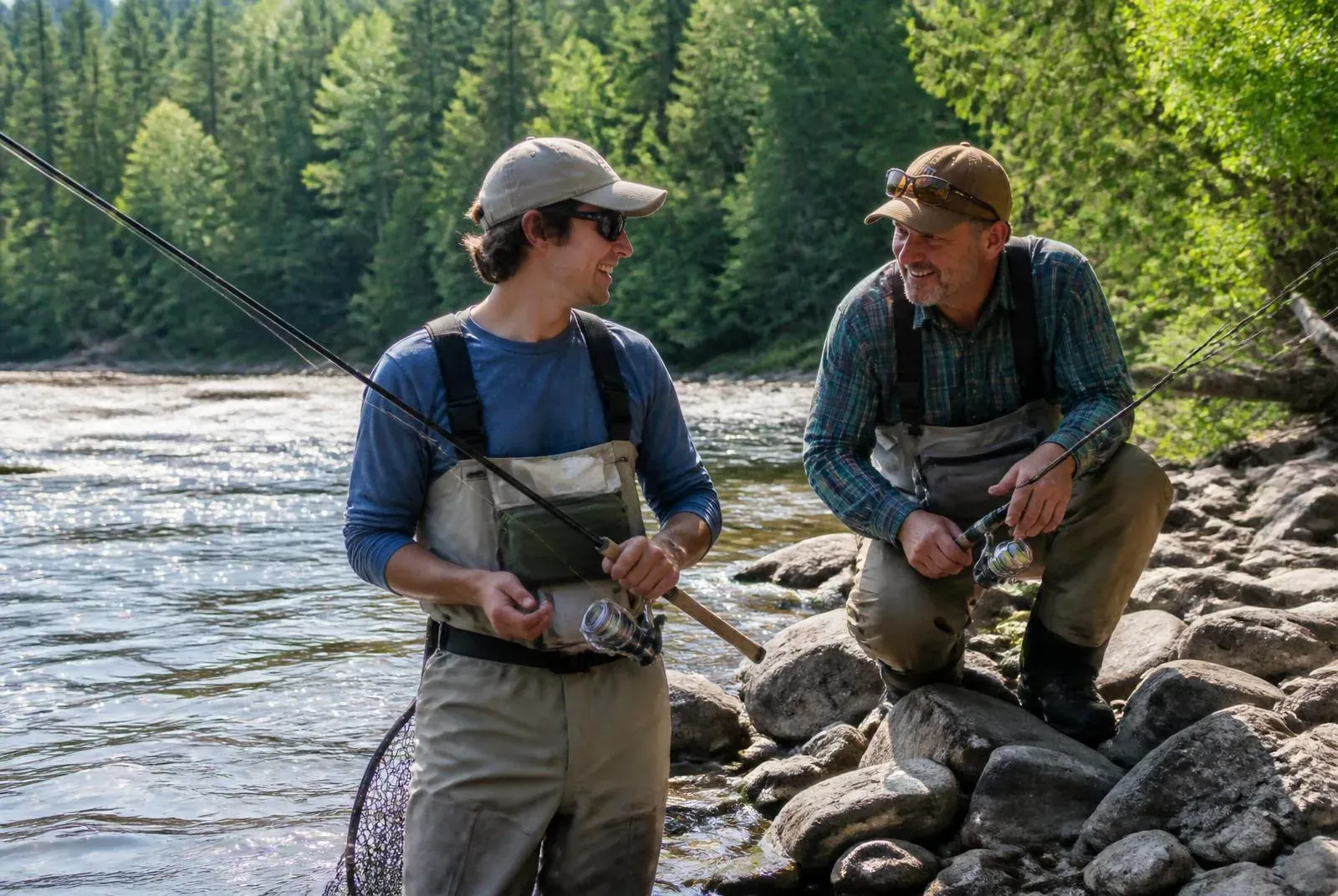
The city behind you. The forest ahead.
Then, somewhere at the end of a road, the sound of a river, a rod in your hand and that little question at every new pool: “What's hiding in there?”
You don't need to be an experienced angler or own hundreds of dollars' worth of gear. A few essentials, a desire to explore and a day ahead of you are all it takes.
Gear made easy
What I provide
Free bait
Every trip: earthworms, on the house.
Lure & fly kit · $15.99 / person
Lure & fly kit — $15.99 / person: flies, hooks, split shots, soft baits, spinners and spoons. Just bring waders or tall rubber boots and your spinning or fly rod.
Complete fly kit · $45.99 / person
Complete fly kit — $45.99 / person: fly rod, reel, line, leaders, flies, indicators and the full lure kit. Waders not included.
Waders or tall rubber boots
The one thing to bring yourself, whatever kit you pick.
Pick your kit when you book — or bring your favourite gear. Either way, you're ready to fish!
Checklist
Heading out soon? Start here.
Must-bring essentials
- Valid Quebec fishing licence
- Rod and reel
- Lures, flies or natural bait fishing gear
- Water
- Lunch and snacks
- Weather-appropriate clothing
- Long sleeves and pants recommended, especially in spring, for mosquito protection
- Footwear with good traction
- Water shoes if you have them — they work very well in many situations
- Small backpack
- Insect repellent
- Fully charged phone
Strongly recommended
- Waders
- Water shoes if you don't have waders
- Trout landing net
- Polarized sunglasses
- Rain jacket
- Cap or hat
- Extra socks
- Change of clothes in the car
- Small towel
Don't have everything? Don't worry.
Don't let a gear list keep you from enjoying the experience. Message me before buying anything: I'll tell you what's really needed and which things you already own will do the job.
Ask me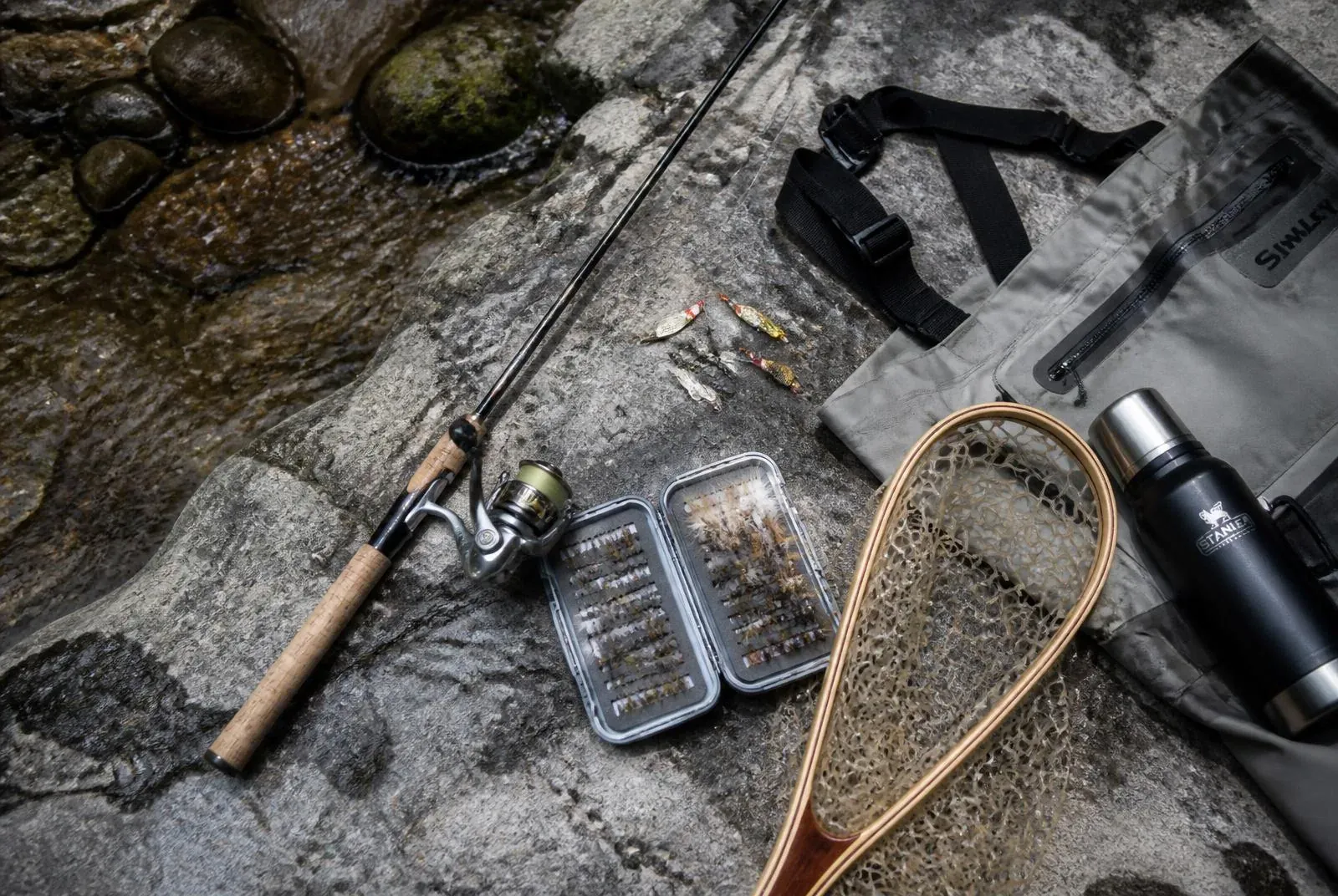
What equipment do you need for river trout fishing?
For most of our brook trout and brown trout trips, light gear is best. We can use spinning gear, natural bait or flies, depending on your preferences and the conditions.
- Rod
- Light or ultralight
- Reel
- Small spinning reel
- Fluorocarbon
- 4–6 lb
- Recommended maximum
- 8 lb
Why such light gear? Because on a small wild river, everything feels more intense: the bite, the fish's first run, every change of direction.
But it's not just about the feel. Wild trout can be extremely wary. In clear or shallow water, heavy line makes the presentation much less natural: a trout may follow your lure and refuse to bite simply because something looks wrong.
4–6 lb fluorocarbon is much less visible underwater while remaining strong enough for most trout we encounter. We can go up to 8 lb when conditions call for it — but with trout, bigger isn't always better.
A wild trout on light tackle is simply much more fun.
Lures & bait
Which lures should you bring for trout?
You don't need a box of 200 lures. A handful of good lures, presented in the right place and the right way, is often worth much more.
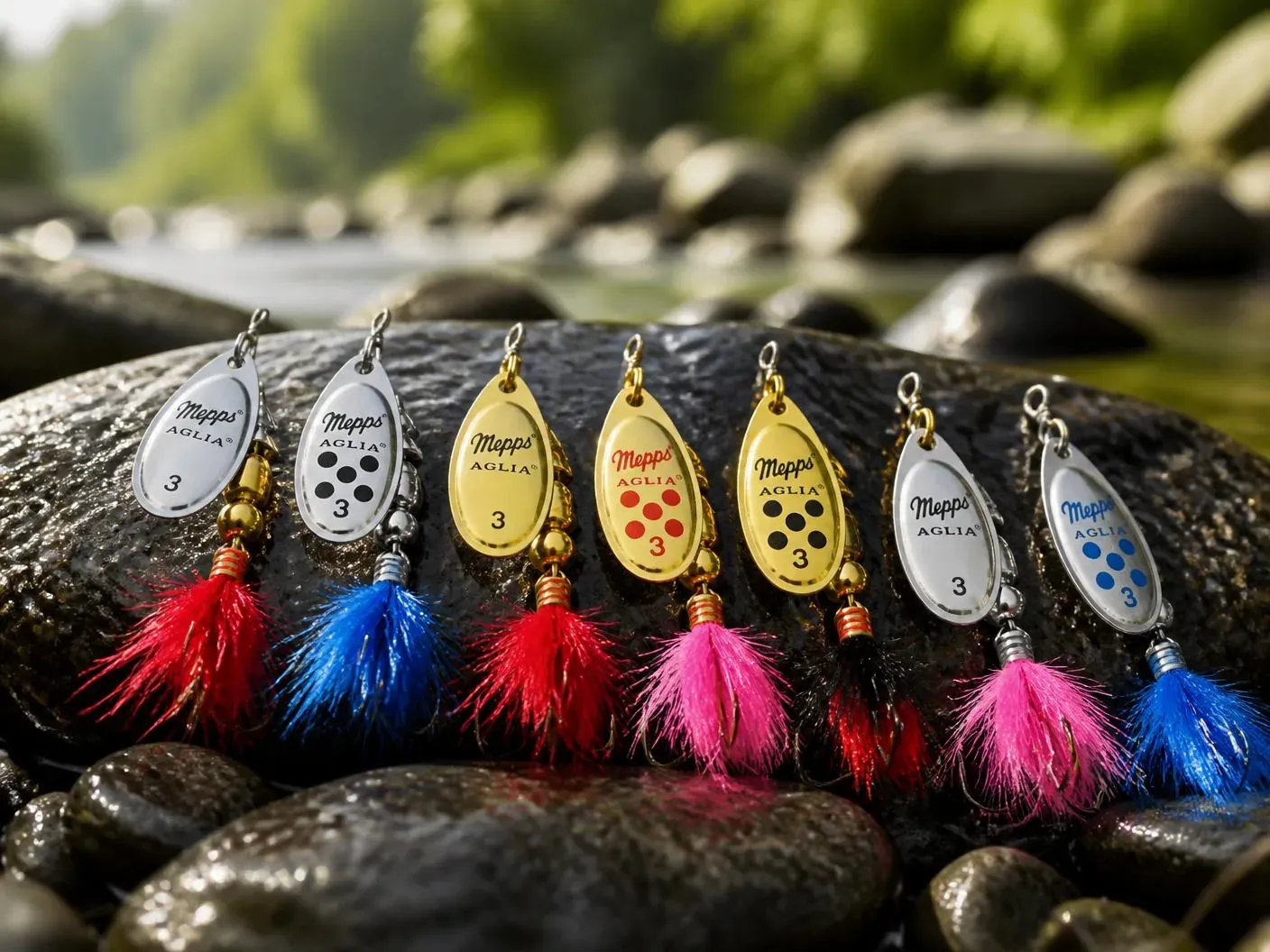
Small inline spinners
Small Mepps and other trout spinners are among my favourite choices.
- Red
- Blue
- Pink
- Pink and blue
- Natural colours
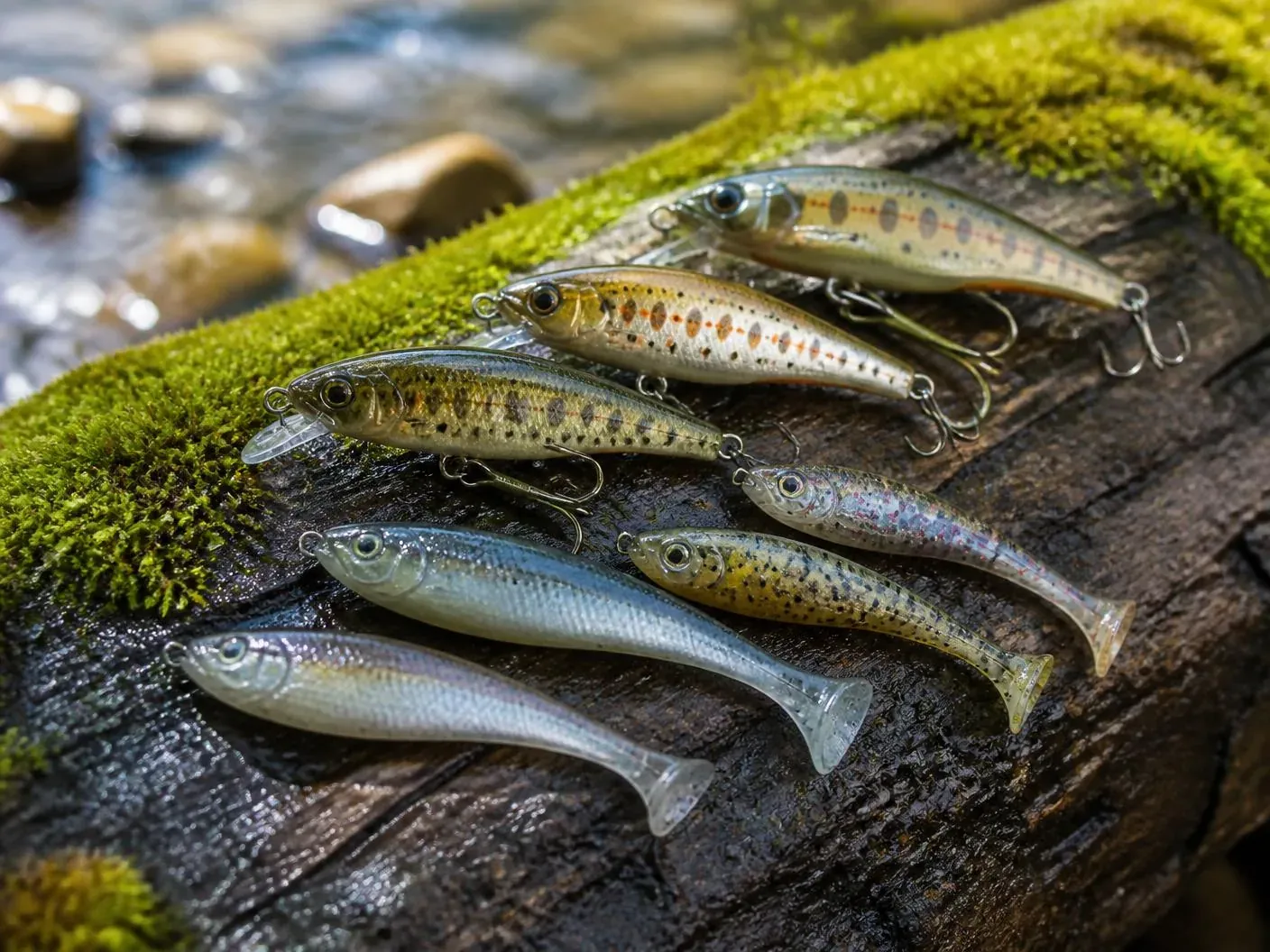
Small crankbaits and swimbaits
A few small models, with an emphasis on trout-sized lures.
- Small trout imitations
- Small baitfish imitations
- Natural colours first
Each lure in photos
What do they actually look like?
Don't know the names? No problem. Here's exactly what I bring, one photo at a time.
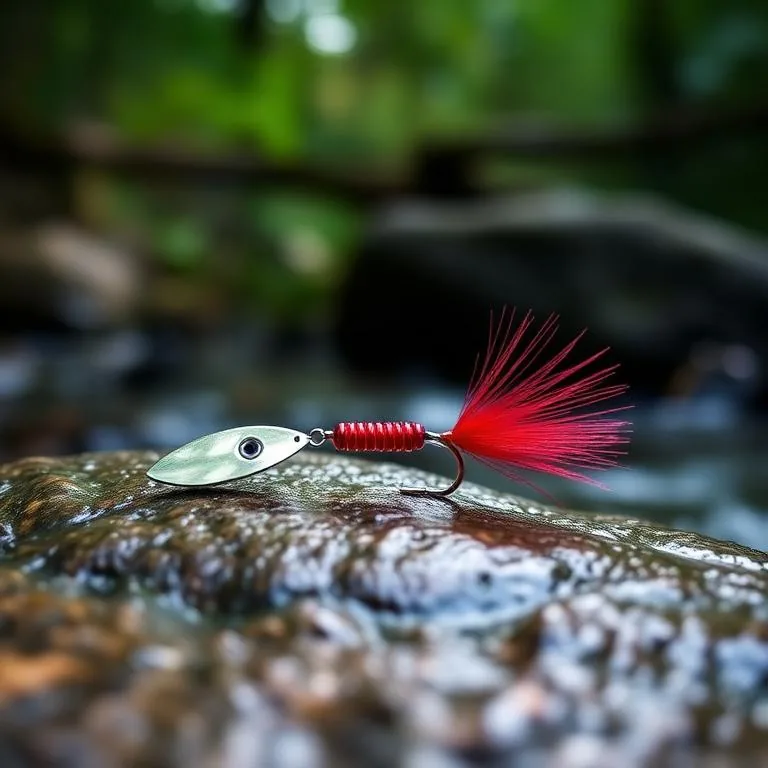
Red spinner
Small #1 or #2 Mepps — a reliable choice in stained water
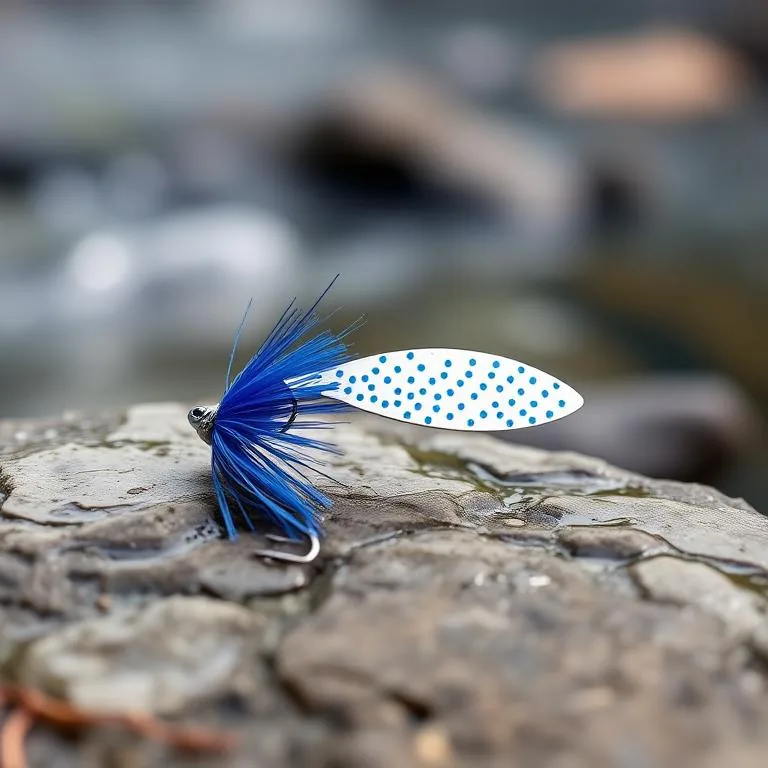
Blue spinner
Excellent in clear water and sunny weather
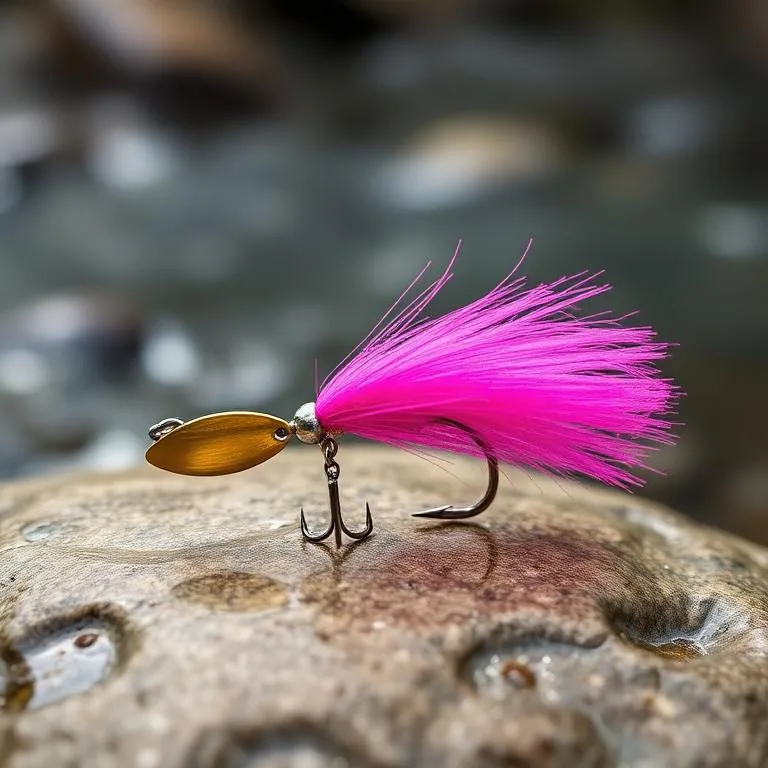
Pink spinner
Gold blade: ideal when trout are active
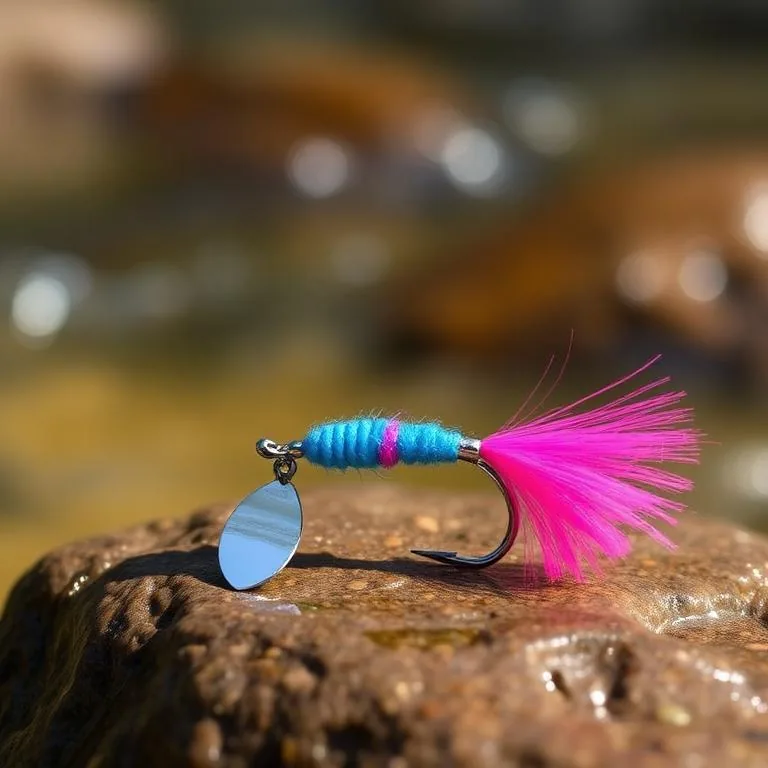
Pink and blue spinner
The combination that often triggers a strike when nothing else works
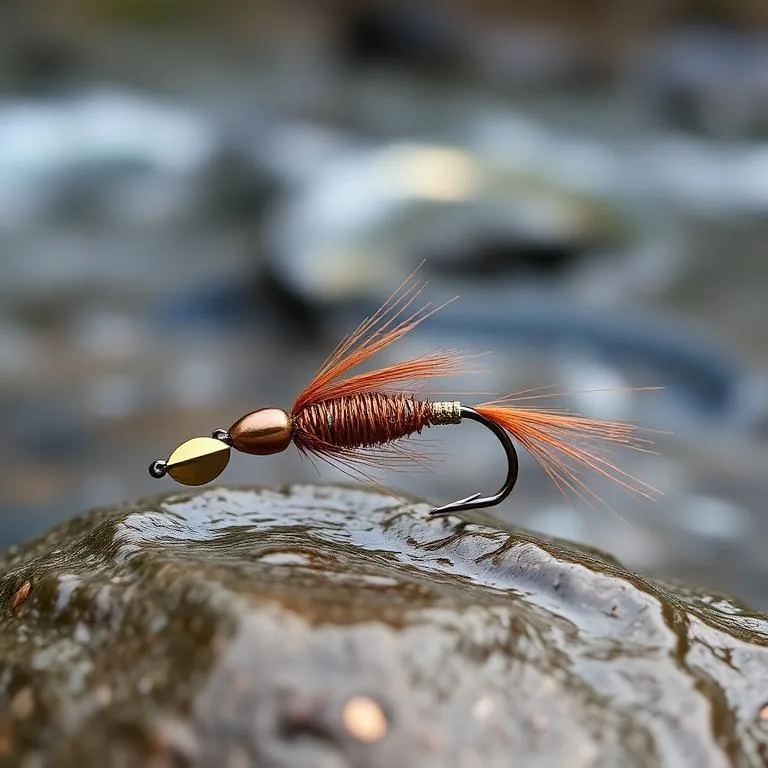
Natural-coloured spinner
A subtle insect or small-fish imitation
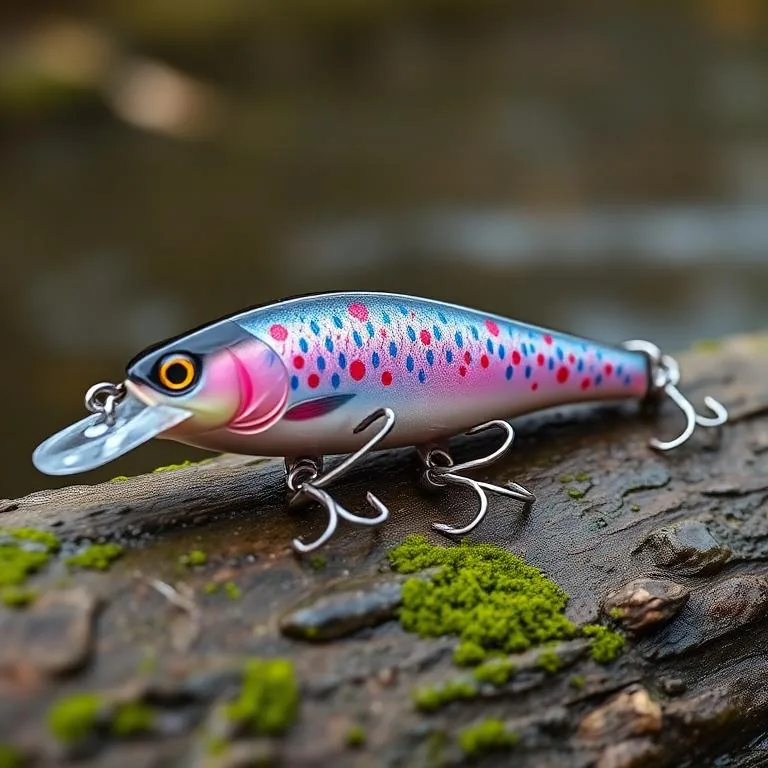
Trout-coloured crankbait
Pink and blue body with red, blue and yellow spots — a little trout fleeing
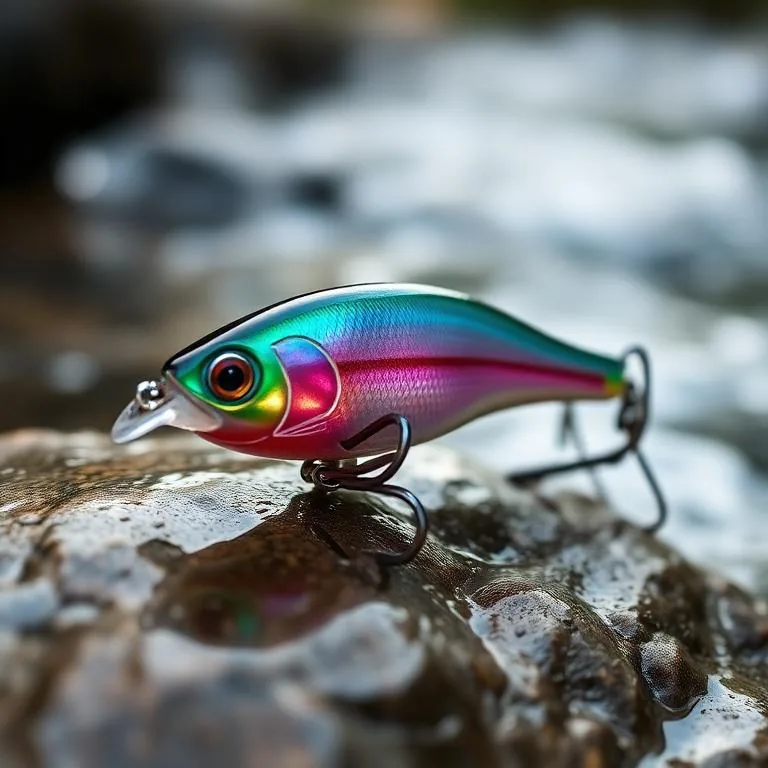
Rainbow smelt swimbait
Silver, green and pink flashes: the number-one food for landlocked salmon and big trout
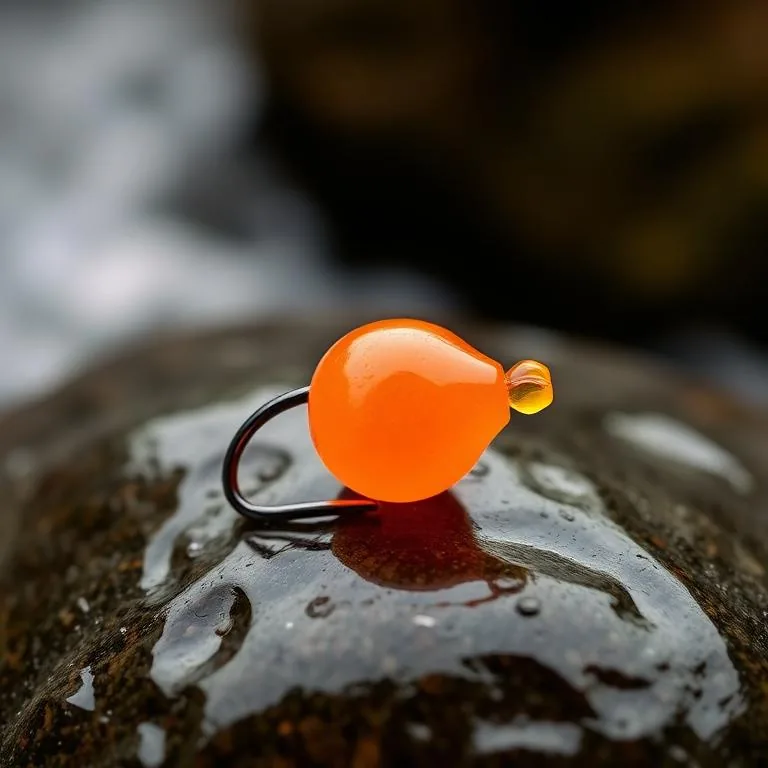
Salmon roe (imitation)
An orange bead on a #8 hook, alone or in a cluster of 2–3
The goal isn't to cast everywhere. You'll learn to look at a river differently: the current behind a rock, a darker pool, a quiet edge. Then to think “there should be a trout right there” — and cast into exactly the right spot.
A favourite technique
Natural bait drift fishing: very effective in rivers
One technique I especially enjoy teaching is drift fishing with natural bait and a float. There's something exciting about watching a float drift naturally with the current… then suddenly disappear.
What you'll learn
- How to rig your line
- How to set your fishing depth
- How to let your bait drift naturally
- How to recognize a bite
- Where to drift your bait
- How to fish areas with current
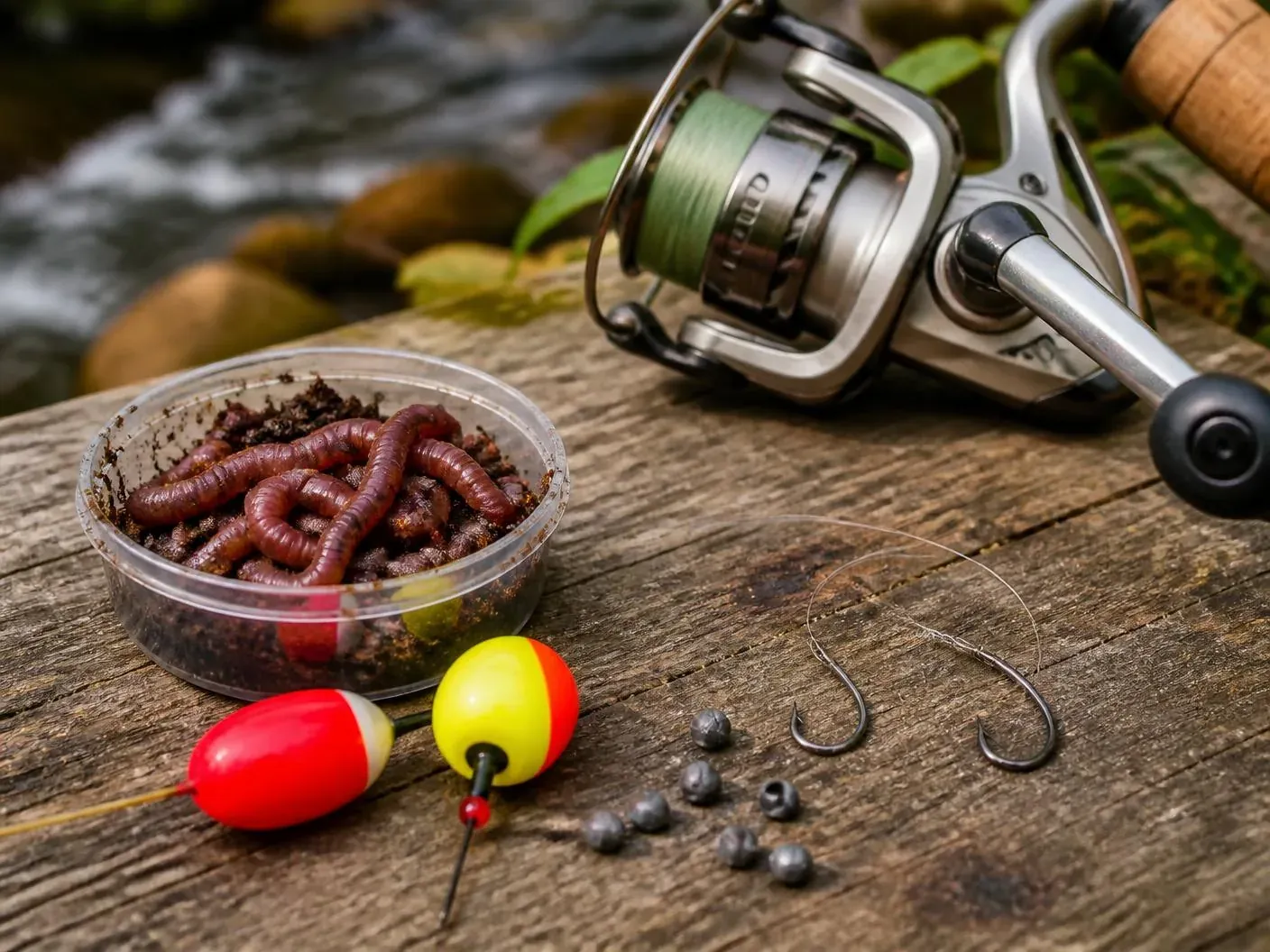
Recommended gear
- Small floats
- #6 and #8 hooks
- Small split shot sinkers
- Earthworms
- 4–6 lb fluorocarbon
Don't have worms? We can usually stop at a convenience store before heading to the fishing areas.
Drift fishing gear in photos
One photo for each piece
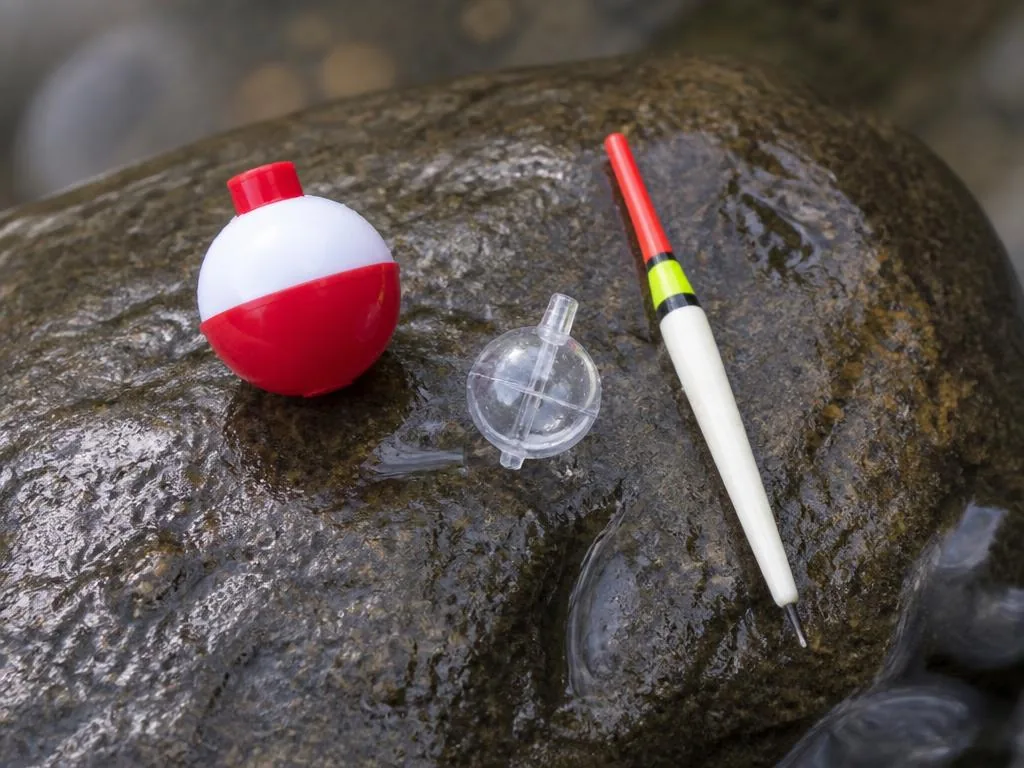
Small floats
They set the depth and signal a bite
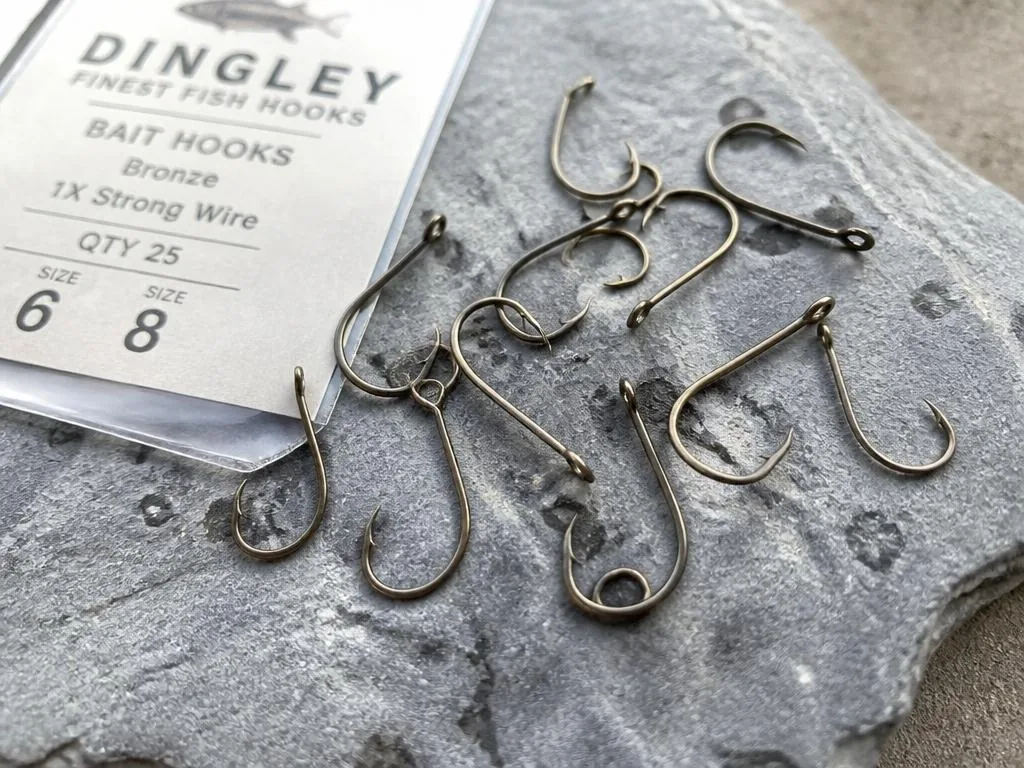
#6 and #8 hooks
Small bait hooks: discreet and perfect for trout
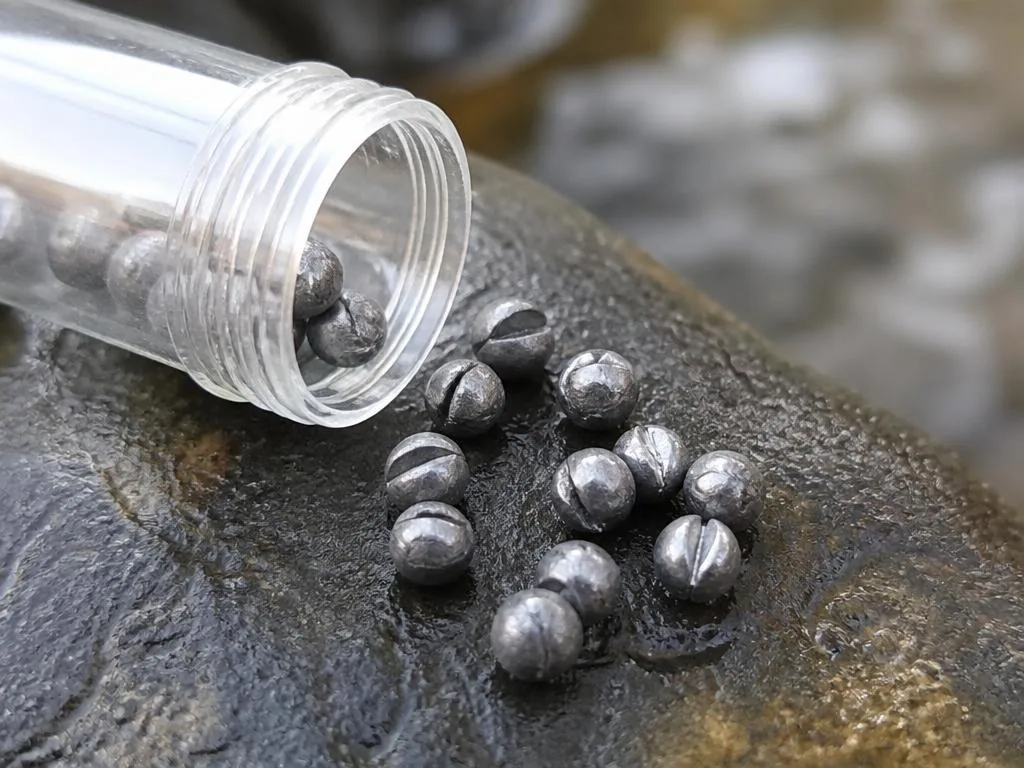
Small split shot sinkers
They take the bait down to the right depth
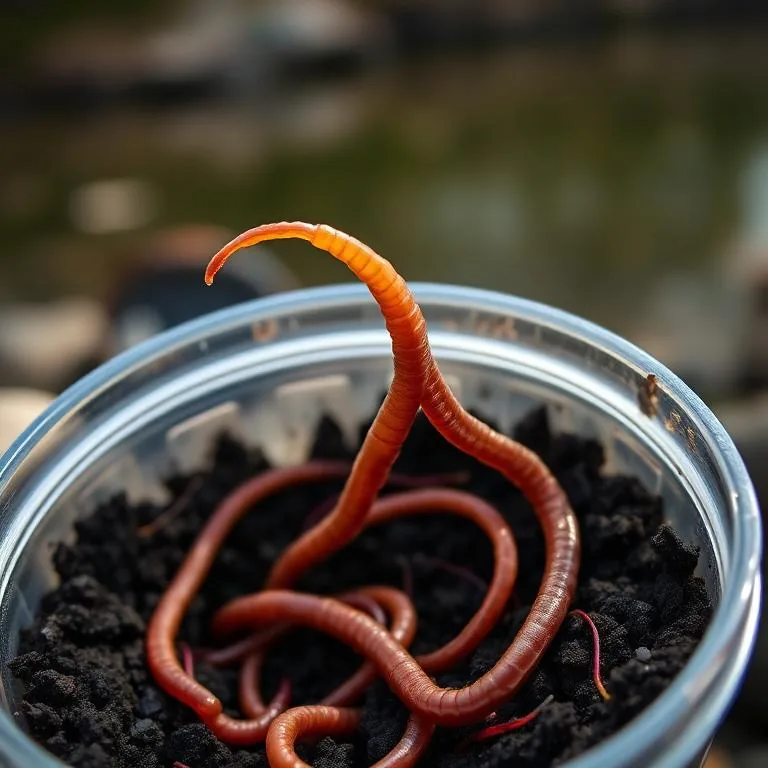
Earthworms
The most effective natural bait in rivers
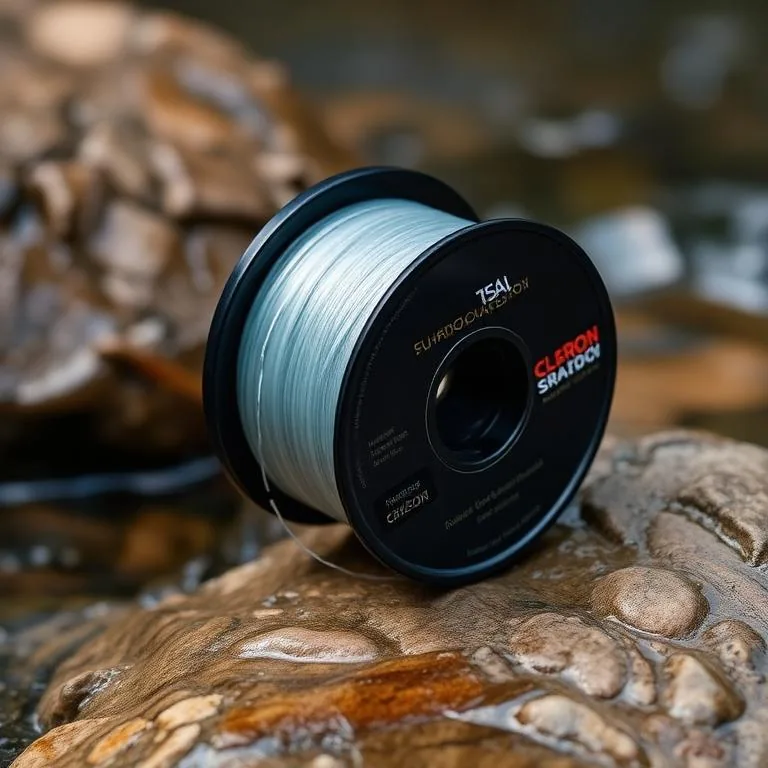
4–6 lb fluorocarbon
Almost invisible underwater
Fly fishing
What equipment do you need for trout fly fishing?
5- or 6-weight rod
It's an excellent all-round choice for the rivers we fish and makes for a great experience. A 7- or 8-weight also works if that's what you already own: there's no need to buy a new rod just for the trip.
Not sure which fly to choose? That's part of the experience. On the water, I'll show you what to choose based on the area, current, depth and insects present, and we'll adjust to how the fish respond.
You can even send me a photo of your flies or equipment before the trip: I'll tell you what's worth bringing.
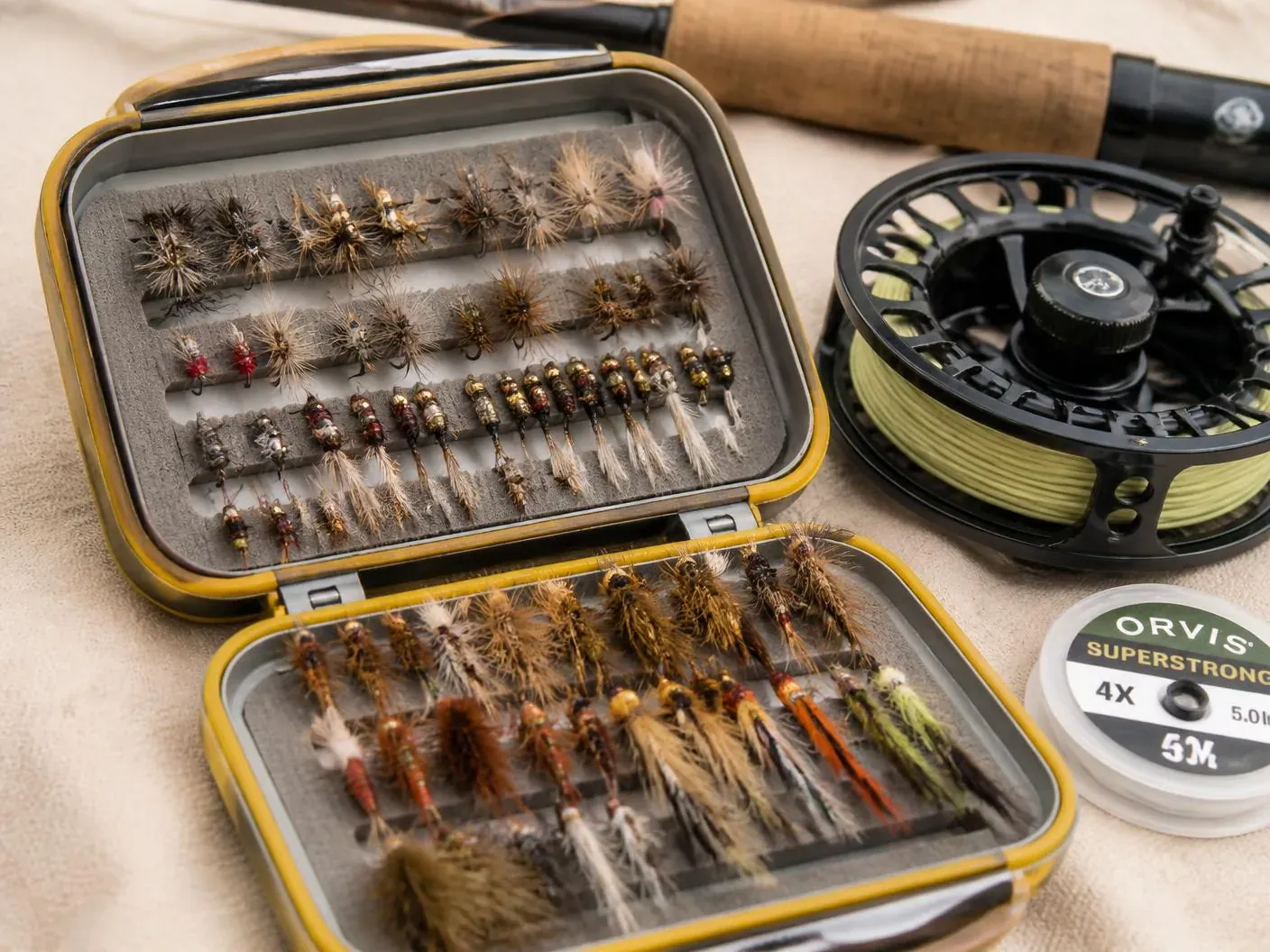
Flies to bring
A few dries, some nymphs and two or three streamers: that's more than enough for a day.
- Dry flies
- Nymphs
- Small streamers
- Leader
- Tippet
Each fly in photos
Dry fly, nymph or streamer?
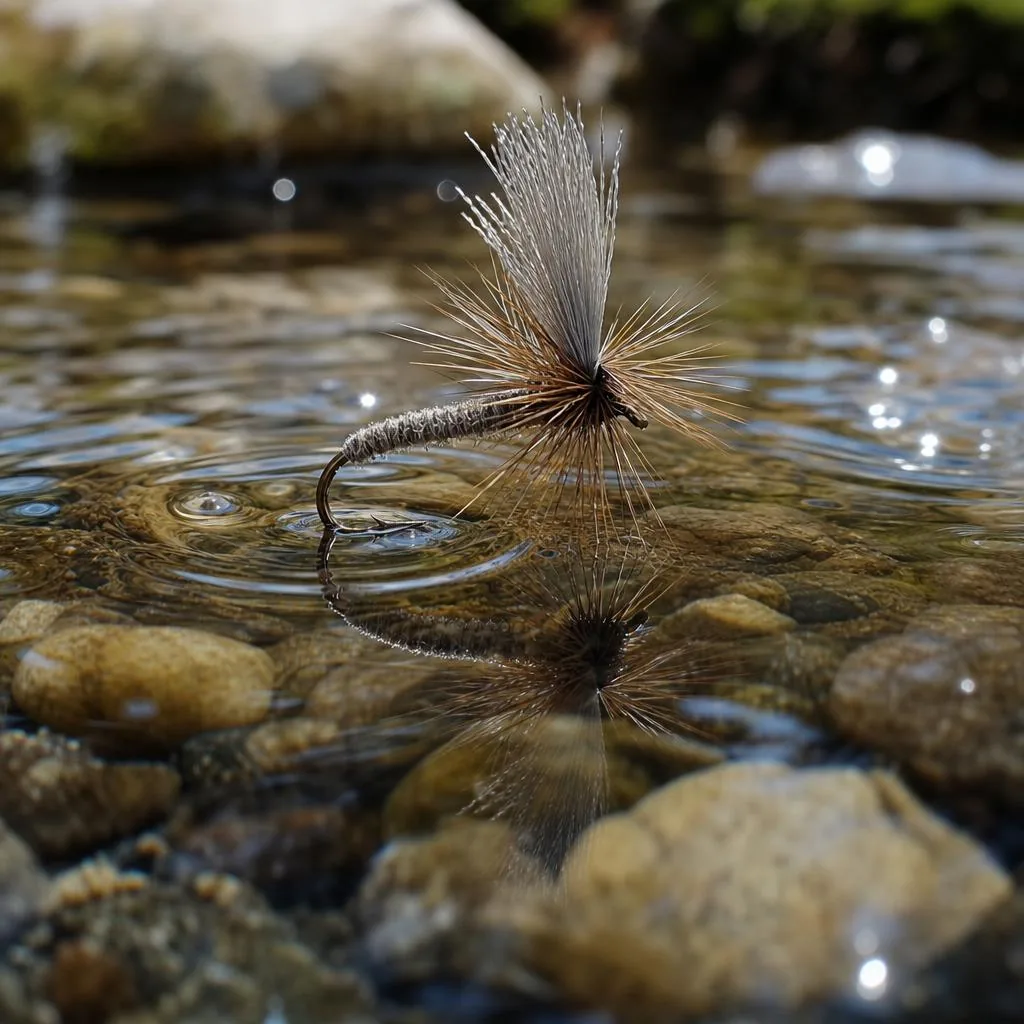
Dry fly
Floats on the surface — the fly that brings trout up to rise
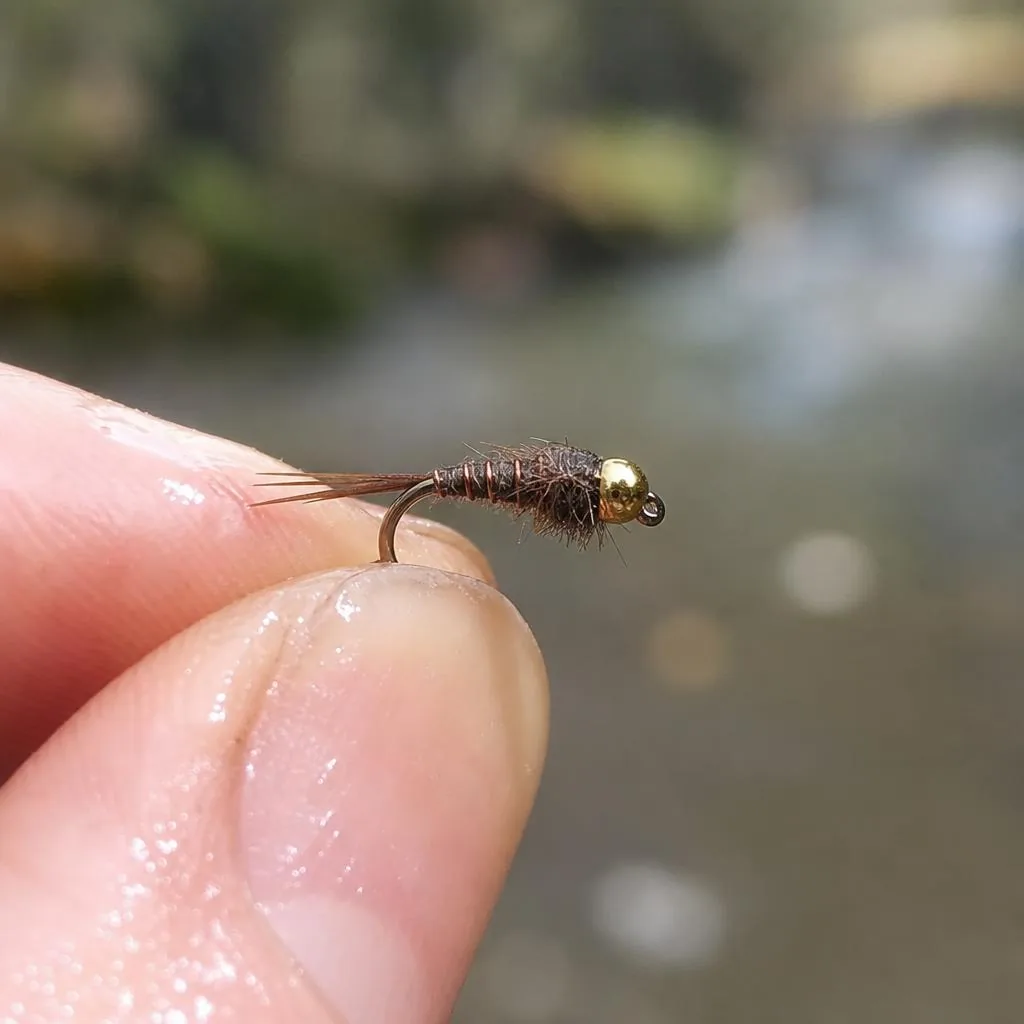
Nymph
Gold bead, fished below the surface: the most productive option
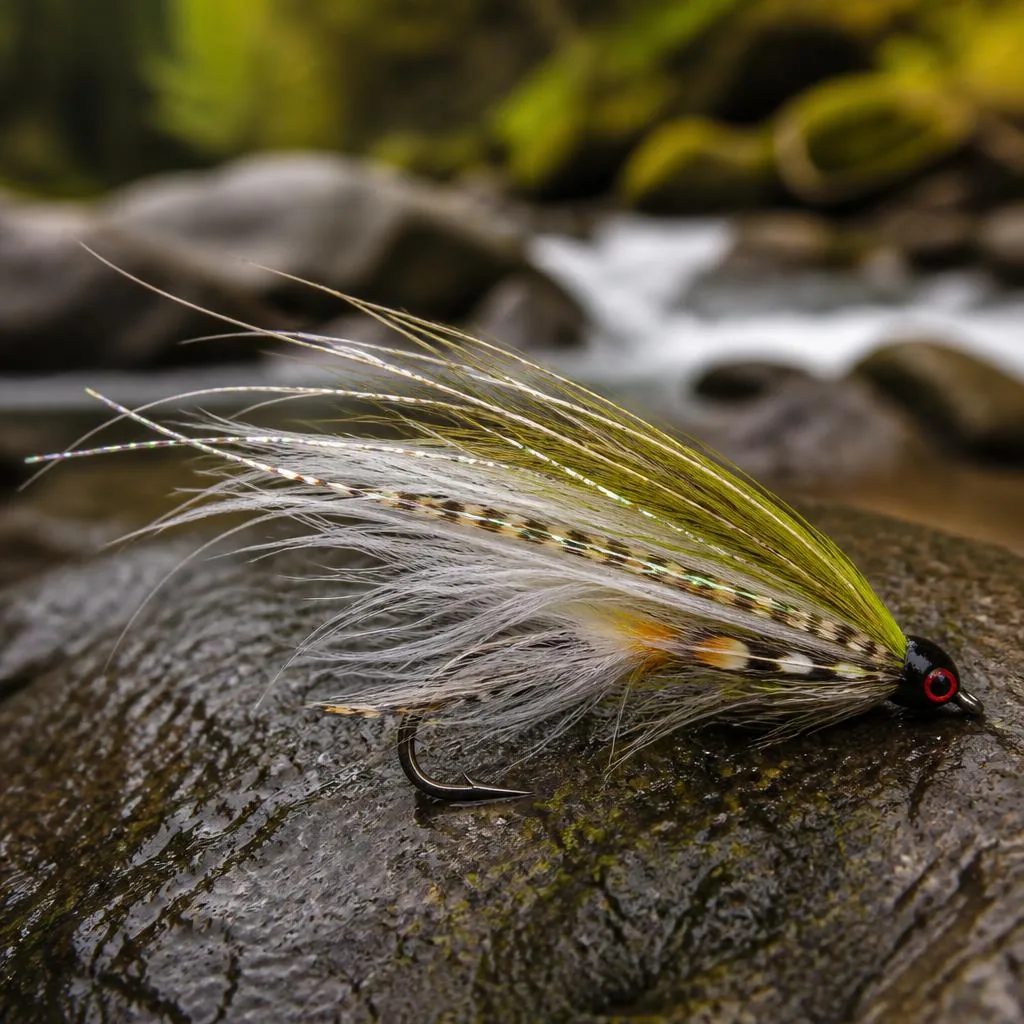
Streamer
Imitates a small fish or leech; fish it with an active retrieve
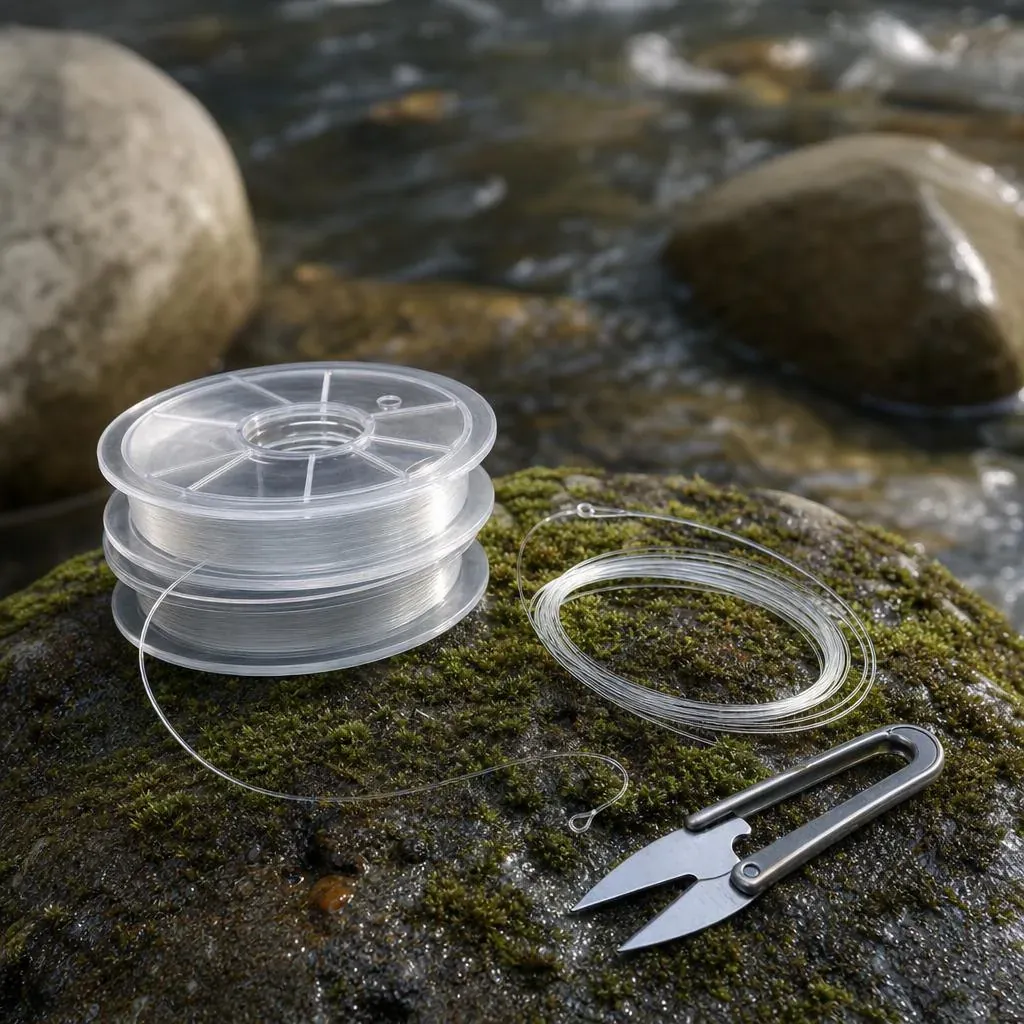
Leaders and tippet
Spools of clear line tied between the fly line and the fly
All the recommended gear
Recommended gear, in photos
You don't need to know fishing terminology. Look at the photos: if you already own something similar, bring it.
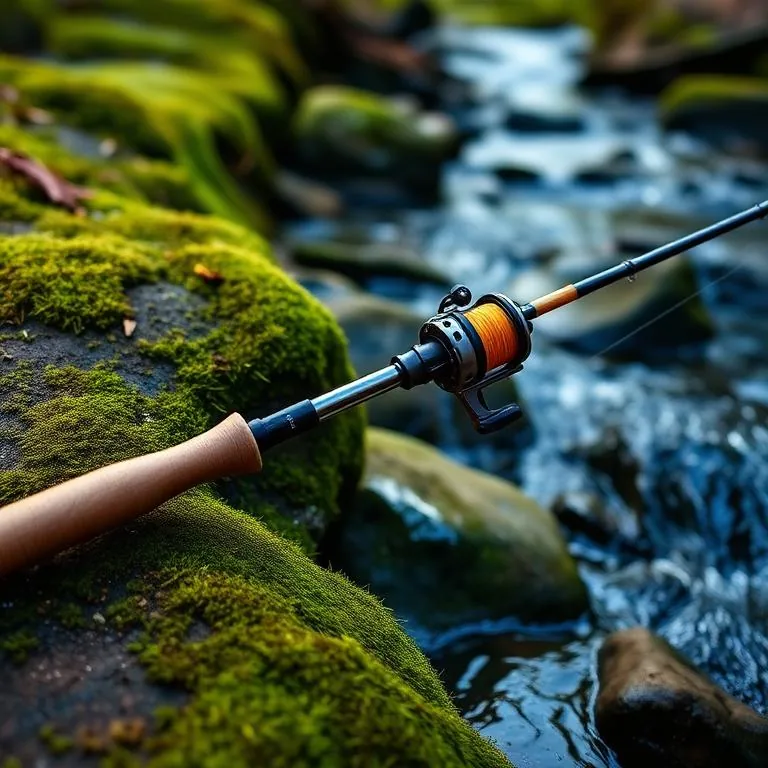
Rod and reel
Light or ultralight rod + small spinning reel
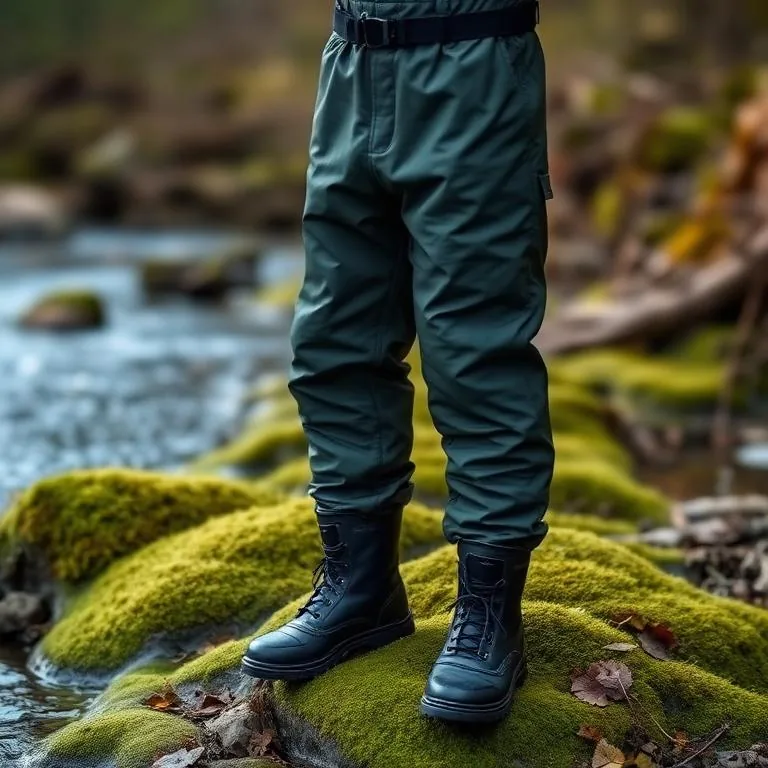
Waders
For getting into the water while staying dry
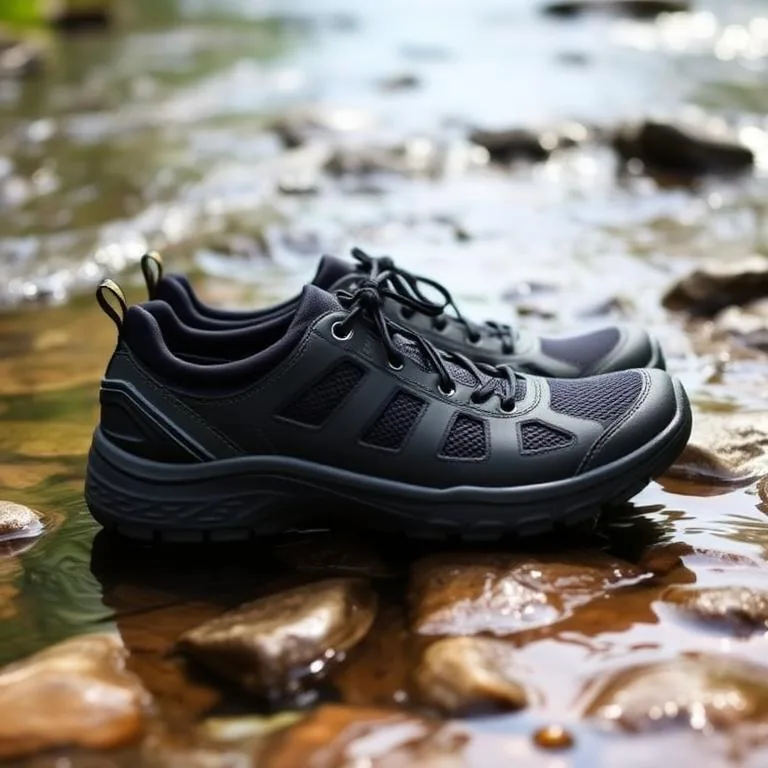
Water shoes
An alternative to waders that works very well
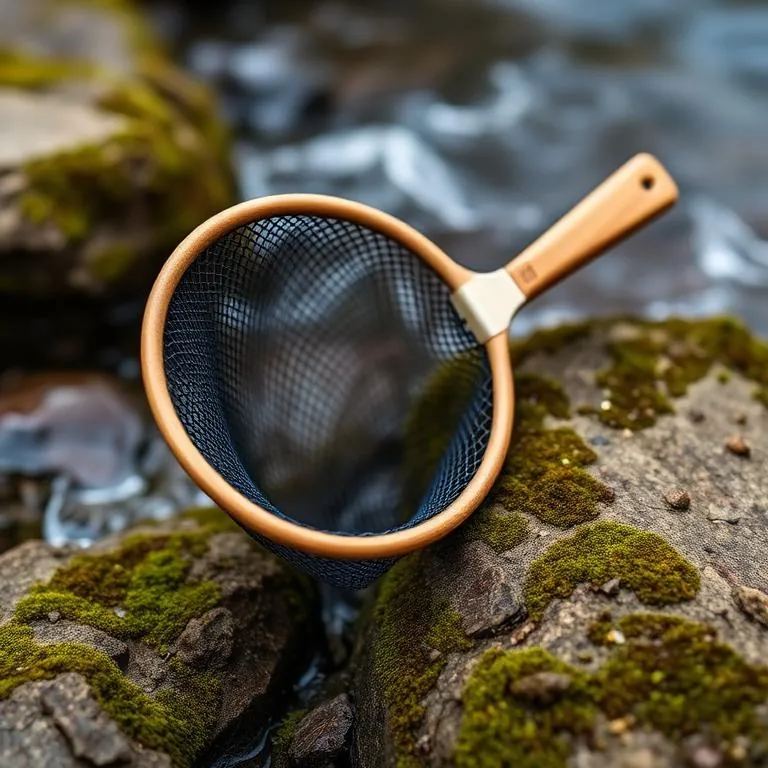
Trout landing net
It helps land your catch safely and protects the fish
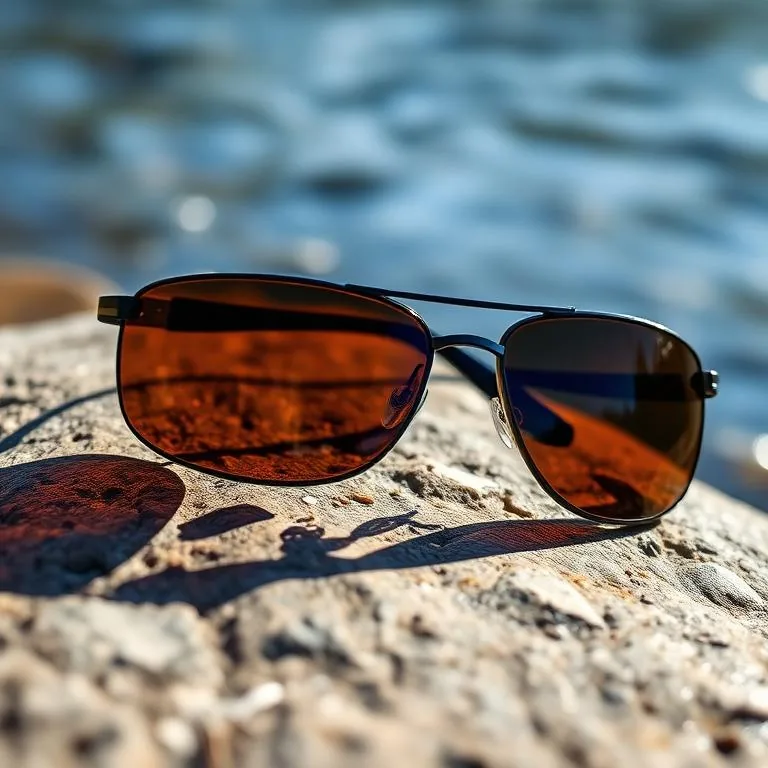
Polarized sunglasses
They cut glare and let you see into the water
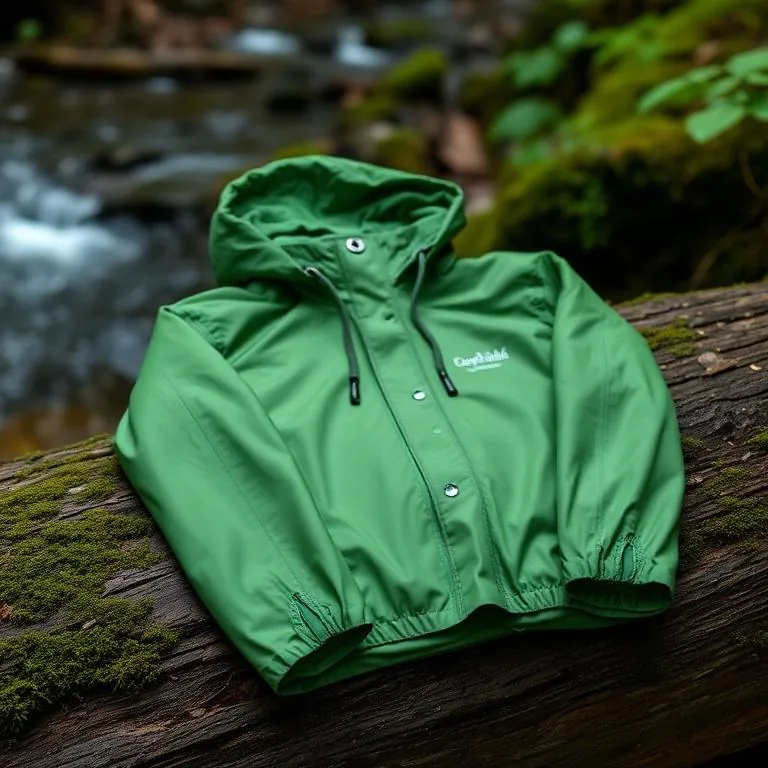
Rain jacket
The weather changes quickly in the forest
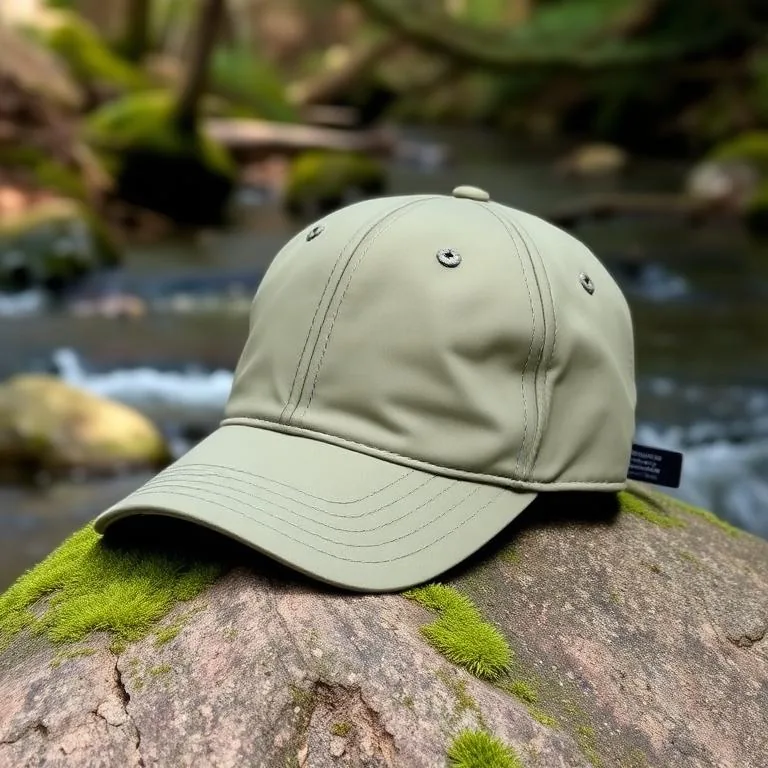
Cap or hat
Sun, branches, hooks: simple and useful protection
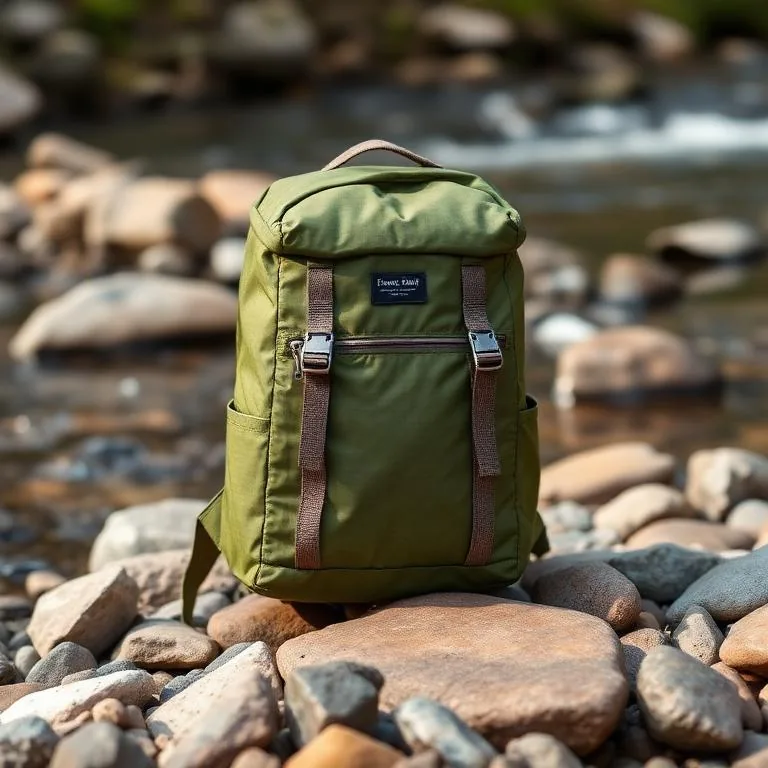
Small backpack
Lunch, water, windbreaker and lure box
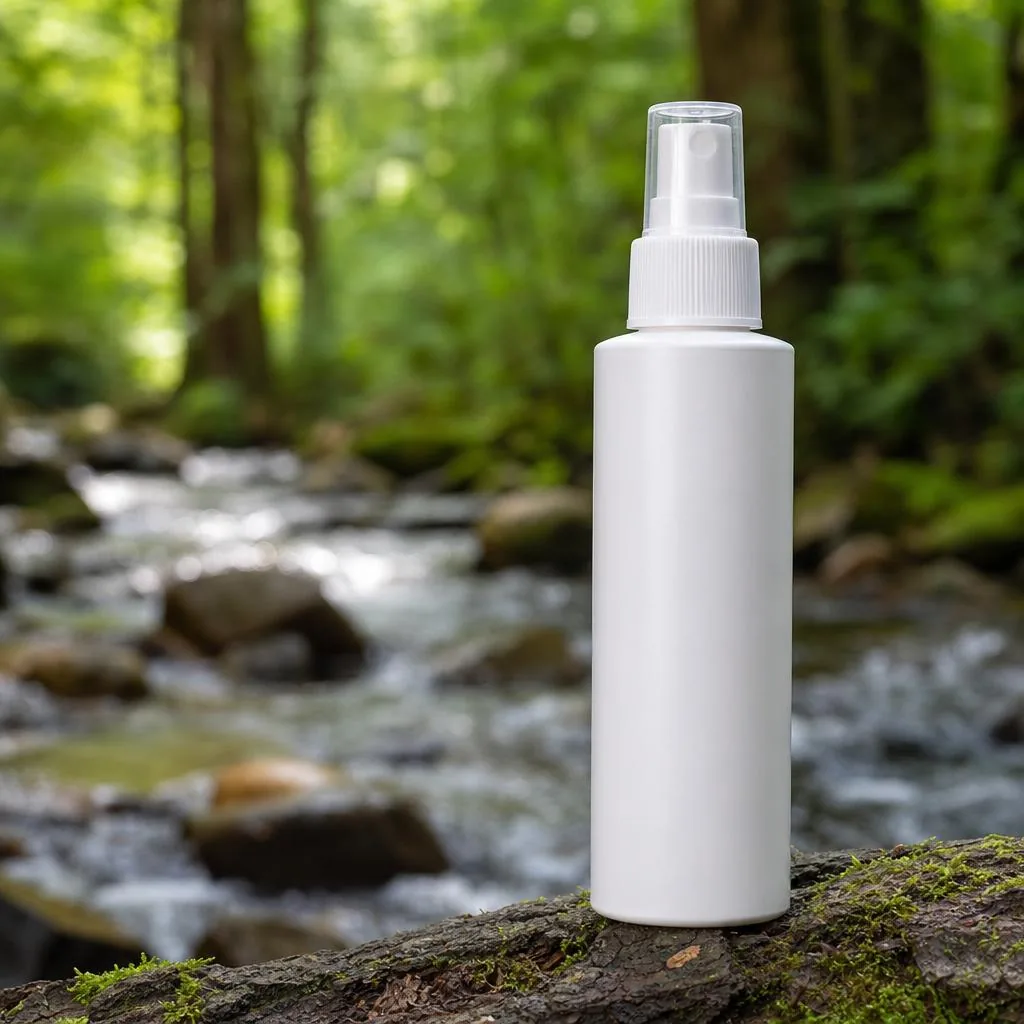
Insect repellent
Essential in spring and early summer
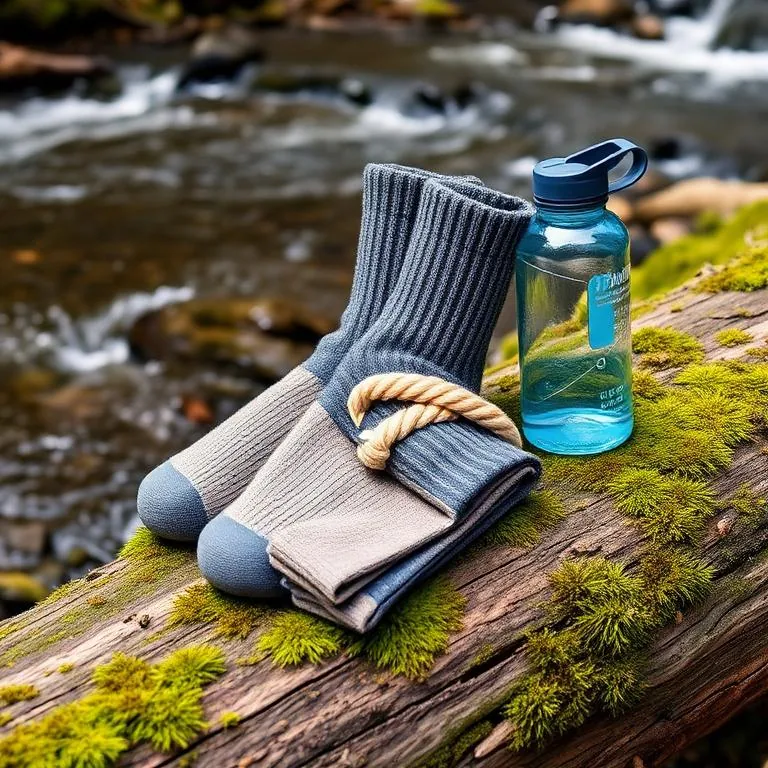
Spare socks, towel and water
Small comforts that make a difference over a full day
Send me a photo: I'll tell you what will work.
Do I need waders or tall rubber boots?
No. They're very useful for many river trips, but not required everywhere. If you have them, bring them. Otherwise, water shoes work very well in many areas.
- Walking along the river
- Wading into the water and crossing shallow areas
- Walking on rocks
- Passing through wet areas
Be ready to get a little dirty and possibly wet: it's part of the adventure. And if that's not your kind of day, we'll adapt the trip to your comfort level.
What footwear should I wear?
Comfortable footwear with good traction. Avoid completely smooth soles: wet rocks, roots and riverbanks are slippery. If you have wading boots, bring them with your waders.
The goal isn't to have perfect gear. It's to be comfortable enough to forget about your gear.
What should I wear?
In the forest and near rivers, temperatures are very different from Montreal: even in summer, mornings can be cool. Wear several light layers that you can remove as the day warms up.
- Lightweight rain jacket
- Cap or hat
- Extra socks
- Change of clothes left in the car
- Long pants and long sleeves, especially in spring (mosquitoes)
A little rain doesn't mean a bad day of fishing. Sometimes the least perfect days become the most memorable.
Why polarized sunglasses?
They reduce glare on the water and often help you see:
- The bottom and rocks
- Underwater structure
- Changes in depth
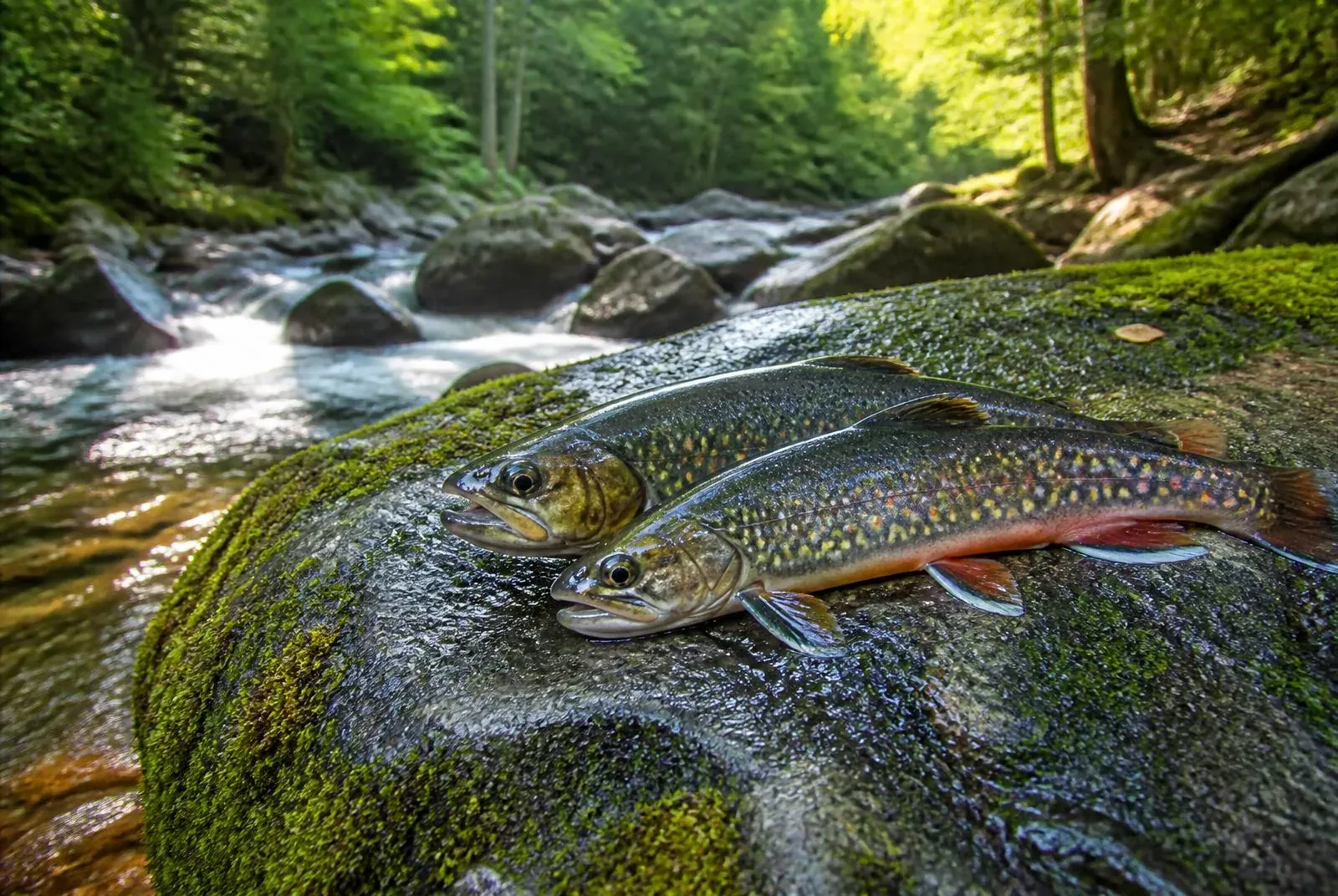
- And sometimes… the fish themselves
Especially useful when learning to read a river. Seeing a beautiful trout holding in the current before it even touches your lure adds another dimension to fishing.
Should I bring lunch?
Yes. Pack lunch, snacks and plenty of water.
We can also stop at a convenience store in the morning for a sandwich, drinks, snacks, earthworms and washrooms. Many areas we visit are remote — once there, there may be no shops or washrooms nearby.
For a few hours, we leave the city, notifications and everyday life behind.
Beginner? You're welcome here.
Never fished for trout? No problem.
Imagine leaving your first day knowing how to look at a river and recognize where a trout might be hiding.
- How to rig your line
- Which lure to choose
- How to cast and present your lure
- How to read the current
- Where to look for fish
- How to approach a river quietly
- How to detect a bite
- How to play a fish and use a landing net
Already experienced? We'll go further: fishing areas, strategies and adapting to conditions. The trip fits your skill level, not the other way around. And if you'd prefer a more relaxed day or less walking, let me know beforehand: several areas are easy to access and can be fished in water shoes.
Equipment rental
$30 / person
Rod + reel (1 rod per person)
$30
Trout lure box
You don't need professional-level gear to start making great fishing memories.
View packages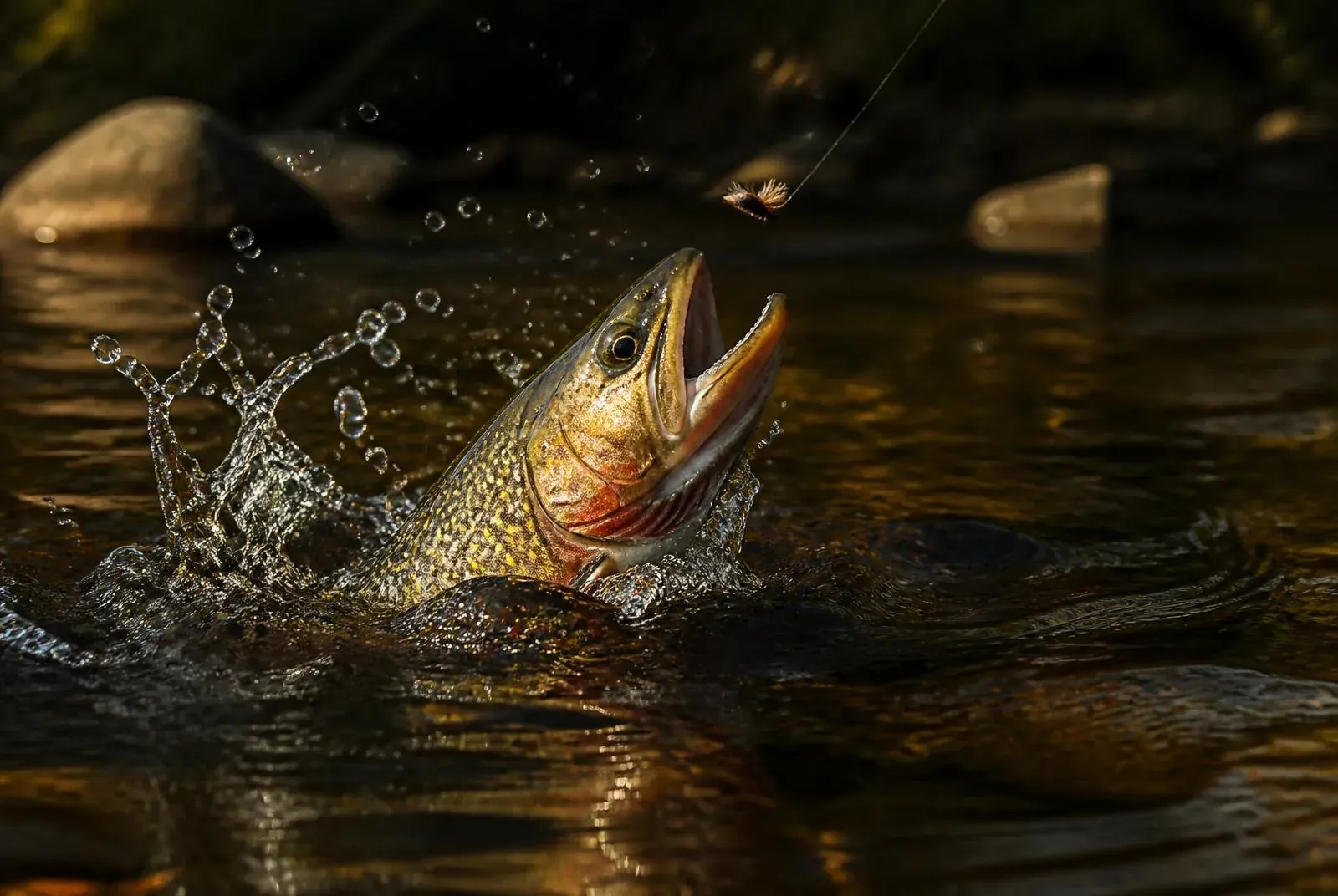
What happens if it has rained?
Rain isn't automatically bad news. The days leading up to a trip have a big effect on the river, so we monitor:
- Water level
- Water flow
- Temperature
- Rainfall and overall conditions
A river is constantly changing. We adapt the area and techniques to the day's conditions.
What to expect from the fishing
Real trip photos and recent fishing reports document our outings. Conditions guide our choice of sector and techniques.
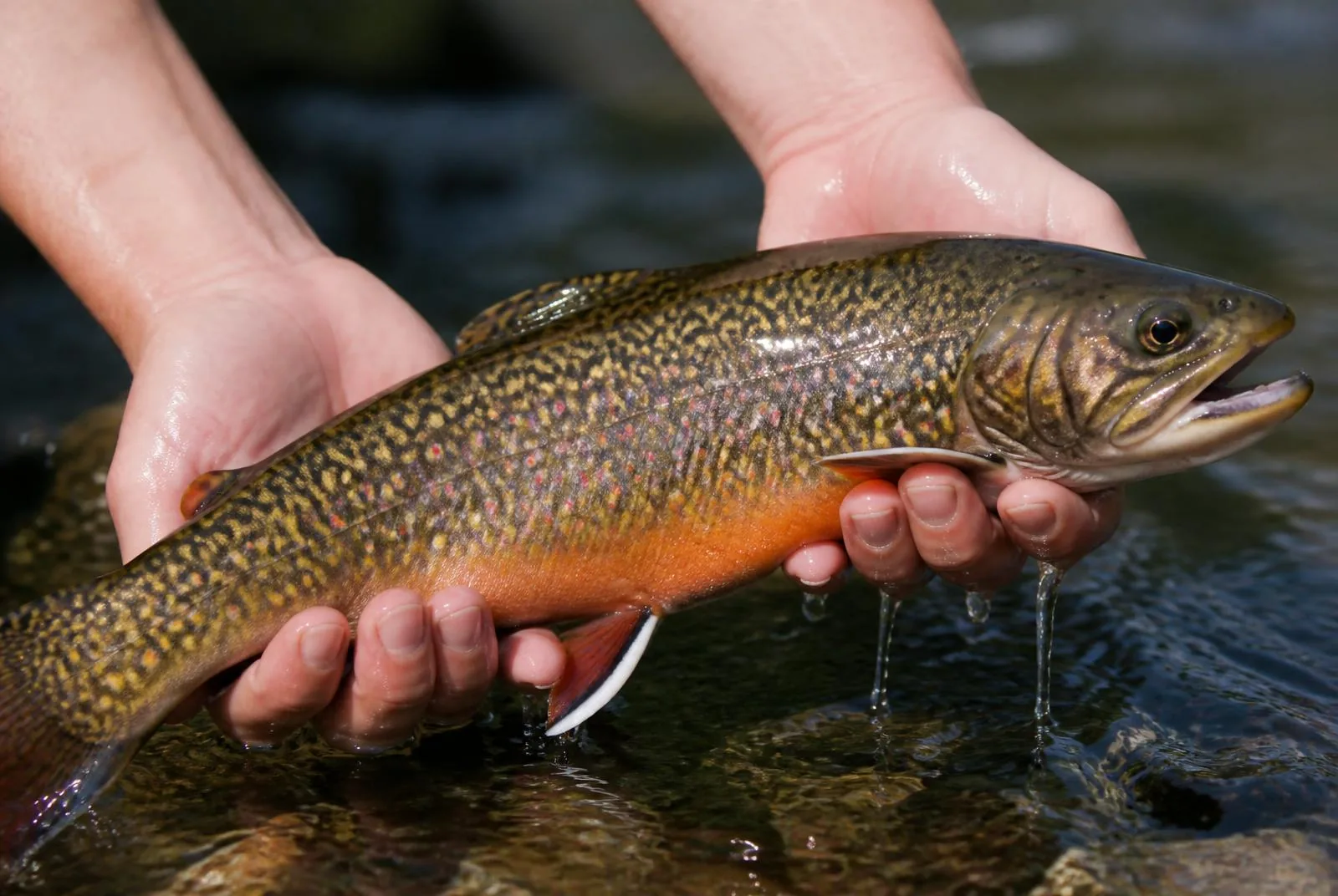
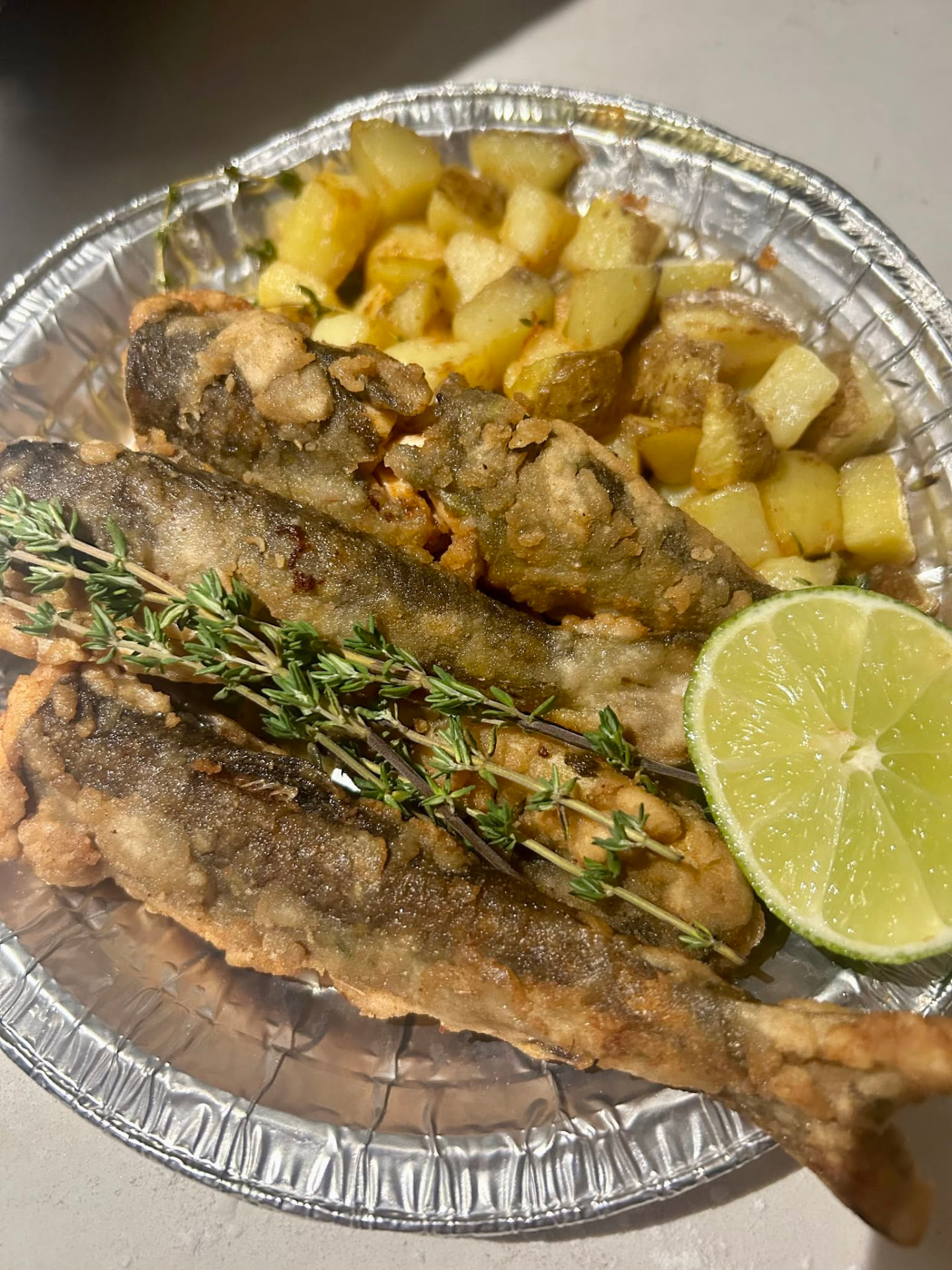
- Often several small wild trout measuring 6–8 inches — excellent eating
- A few nice 8–10-inch brook trout: already a very good day
- On good days: plenty of action and 10–12-inch brook trout
- Occasionally, fish measuring 15–18 inches
Whenever possible, I prioritize areas that produced the most action on my trips the previous week, taking water levels and weather into account. We head out with recent firsthand information rather than just a spot picked on a map.
Where, when and how
Where do the trips take place?
Mainly in the Laurentides and Lanaudière, about 1 hour 30 minutes to 1 hour 50 minutes from Montreal without traffic. Close enough to leave in the morning, far enough to feel like you're somewhere completely different.
Departure point
- Early-morning departure from Montreal
- Meet in the Sainte-Agathe-des-Monts area
- Meet in the Sainte-Julienne area (Lanaudière)
The exact time and location are confirmed before the trip.
Payment & alcohol
Payment is made at the meeting point in the morning, before we leave for the fishing areas. No alcohol consumption during the trip.
Respect for nature
- Fishing regulations and catch limits followed
- No litter left behind
- Respect for fish and their habitat
- We even pick up other people's litter when possible
Cancellation & conditions
No refunds due to weather, river conditions or water level, fish activity, number of fish caught, or a participant choosing to leave before the end of the day.
Safety
Slippery rocks, uneven terrain, roots, water and current: each participant remains responsible for their actions and well-being. Follow instructions and never take a risk to reach a fish — a great catch is never worth an injury.
Frequently asked equipment questions
- Do I have to fly fish?
- No. We can use spinning gear, natural bait or flies. Landlocked salmon can also be caught very effectively with spinning gear.
- Do I need waders or tall rubber boots?
- No, but they are strongly recommended for some river trips. If you have them, bring them. Otherwise, water shoes work very well in many areas.
- What rod should I bring for spin fishing?
- A light or ultralight rod with a small spinning reel and 4–6 lb fluorocarbon, up to 8 lb depending on conditions.
- What fly rod should I use for trout?
- A 5- or 6-weight is an excellent all-round choice for our rivers. A 7- or 8-weight also works if that's what you already own — don't buy a rod just for the trip.
- What if I don't have any equipment?
- A rod and reel can be rented for $30 per person (1 rod per person). A trout lure box is also available to buy for $30.
- Should I bring lunch?
- Yes: lunch, snacks and plenty of water. We can stop at a convenience store in the morning for a sandwich, drinks, earthworms and washrooms. Many fishing areas are remote.
- How does the new guided trip guarantee work?
- For eligible Quebec trout outings, if no fish is caught, I offer you another guided fishing trip, subject to the guarantee conditions explained before booking. Landlocked salmon and the boat package are excluded.
One last question about your gear?
Send me a photo of your rod, lures or flies before the trip. I'll tell you what works and what's worth adding. The river will take care of the rest.
See you on the water.